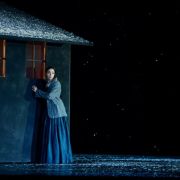
A single flexible set serves the three acts of Jetske Mijnssen’s production of Ariodante for The Royal Opera. Initially a grey box, confining Act 1 to the front third of the stage, the design of Étienne Pluss later opens out and reveals spaces for the action to flow through. There is little furniture once the Act 1 dining table is carried off, which allows space for a sword fight, even though singers have to stand and deliver or, in extremis (as they often were), lie on the floor and sing. The ballets that originally ended each of Handel’s three acts are, as is usual, omitted, although a part if it was repurposed for the duel. One hardly expects to see the Edinburgh court of the libretto these days, but it is at least more palatial than domestic. And it allows Mijnssen, in her house debut, to focus on the characters and their relationships.

Uta Meenen’s costumes are modern, but the servants wear smart red-and-white livery. This is a courtly touch, enhanced at the end of Act 1 when the number of these well-dressed servants swells considerably to become the closing chorus. Props are few, except for the duel with foils and helmets. That apart, there is much gratuitous throwing of the dust sheets covering the table, and Polinesso has fun pretending to help the servants fold these, only to drop them onto the floor. But Polinesso is the villain, that status confirmed when he proves the only character with a tobacco habit. But Act 1 has little action beyond declarations and rejections of love, both apposite and misdirected, so we need two more acts to reunite true loves sundered and realign any mésalliances.


We need that sword fight to rid us of Polinesso, who has declared there is no virtue in being virtuous. Christophe Dumaux’s countertenor took a short while to come into focus, but its varied colours and athletic coloratura gave much pleasure thereafter, on his Royal Opera debut. Lucarnio, who slays him, was sung by Ed Lyon. The British tenor sang well, if unable to display all his qualities in this role, for it was largely confined to the middle and upper-middle registers. That might simply have been Handel nursing along his very young – aged just 17 – new recruit to his company, John Beard, soon to be famous as Handel’s regular tenor lead in oratorio.
The other male lead was that rarity in Handel opera, a bass with a full, and fully characterised, role. The King of Scotland, sung by Slovakian Peter Kellner, spent his time reminding us he was dying, with appearances always in a wheelchair or a hospital bed. When he died at the very end, it almost went unnoticed, as we were at a wedding. Kellner’s bass was rather gritty at times, but effective as the voice of a moribund monarch.

In the title role Emily D’Angelo was angelic, her burnished mezzo-soprano a gift to the trouser role with its emotional range and fine music. Her sublime ten-minute scena “Scherza infida”, in which Ariodante moves from despair to newfound resolution, was a vocal triumph, earning the biggest cheer of the night for one of the composer’s greatest numbers. Ariodante’s beloved Ginevra was Jacquelyn Stucker, a former Jette Parker Young Artist at Covent Garden. Stucker repaid the house with a very accomplished piece of acting and singing, not only in her despair at the end of Act 2, “Il mio crudel martoro”, but also in her duetting with Ariodante. Dalinda – here Ginevra’s sister rather than her servant – was beautifully sung by Elena Villalón, another house debutant, her aria “Il primo ardor” a delightfully performed love song.


The opera ends with the marriage of Ariodante and Ginevra – or nearly. At the last moment in this production Ginevra throws down her bridal headdress and storms off. Why? One answer is found in the director’s observation that neither the King nor Ariodante ever actually asks Ginevra about the accusations made against her. “The men do not take the women seriously in this piece.” Reason enough to become a runaway bride, surely.

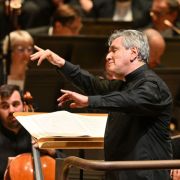
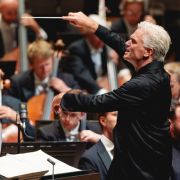
The Orchestra of the Royal Opera House was on its best period performance manners, strings playing without vibrato. One of the many joys of one of Handel’s finest operatic scores is the variety and invention of the orchestral accompaniments, and conductor Stefano Montanari found the right spirit of each one, sometimes leading with his own sparkling violin playing. Performed as well as this, Ariodante is one of the most accessible of all Baroque operas, first played on this site at its premiere on 8th January 1735, and still providing an evening of rich enchantment.