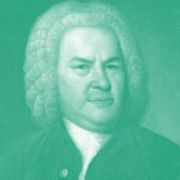
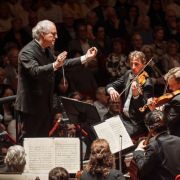
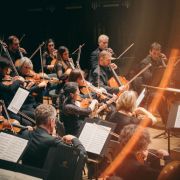
Belgian period ensemble Il Gardellino journeyed to Amsterdam for their festive tour with the Cor de Cambra del Palau de la Música. This is a busy time for the Catalonian choir: their Concertgebouw debut will be followed by appearances in February with Gustavo Dudamel and the LA Phil. With thoughts firmly fixed on all things Christmas, their slimmed down version of Bach’s Christmas Oratorio using just cantatas 1,2,3 and 6, plus an unusually early start, put a spring in the step. Would guest conductor and hugely experienced German lyric tenor, Christoph Prégardien summon the forces to spread a little festive cheer?


All started well with lovely light brass and a wash of sound. Prégardien’s very sprightly tempo did prove especially challenging for the violins and it took a moment for choir and orchestra to fully acclimatise to the Concertgebouw’s generous resonance. Even the oboes’ ornamental turns struggled – their notes swallowed whole in the cavernous dome. But the choir’s sizzling consonants and clear contrapuntal lines gave cause for hope.
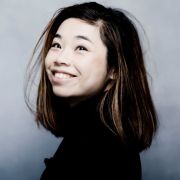
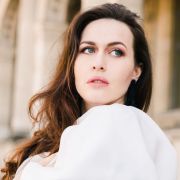
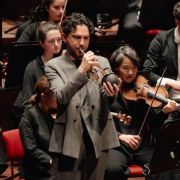
And there was much to congratulate. In duet with German bass Micha Matthäus, Amsterdam-based soprano Alison Lau produced the highlight of the evening. Flitting nimbly between colourful ornamentation and the soaring heights, her crystal-clear declamatory style in “Herr, dein Mitleid” clearly inspired Matthäus to produce his best performance of the evening. German tenor David Fischer received the loudest cheer, and rightly so. His valiant storytelling as the Evangelist was superseded only by his more indulgent arias. In “Frohe Hirten”, tricky runs and cheeky syncopations were complemented by an equally able flute. Likewise, a jubilant “Großer Herr” found Matthäus aided admirably by Sander Kintaert’s virtuosic, dulcet trumpet tones. Delicate and beautifully phrased with a fabulous top D to close, no mean feat for a Baroque trumpeter.
Small tempo adjustments could have taken this performance to the next level. On numerous occasions, either notes melted into the ether or Bach’s intricate ornamentation suffered. The Sinfonia’s shaky start was not alone. Even the final chorale, in its haste, missed the chance to provide a suitably thrilling conclusion. In the same vein, violins appeared confused over vibrato, especially at the end of phrases. Similarly, their very heavy upbeats were in complete contrast to delicate and beautiful phrasing from others.


The most significant challenge of the evening however, was the decision to exclusively use the chamber organ for the continuo as opposed to alternating with say, a harpsichord. And with the double bass only tacet for a couple of arias, many on stage struggled to compete. Even the cellos and flutes were overpowered towards the end. Only with the tenor’s words: “Nun mögt ihr stolzen Feinde schrecken” (Now you may terrify your proud enemies) did the organ muster the necessary restraint and allow the delicate oboes and impassioned tenor to shine.
The most evocative moment of the evening was reserved for the choir, standing in front of Jesus’ crib in subdued reverence. Their polite and understated approach matched perfectly with Prégardien’s timely restraint, his deep respect for the innate musicality of those before him, obvious to all.
This concert was presented by Fred Luiten Concertorganisatie