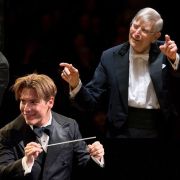
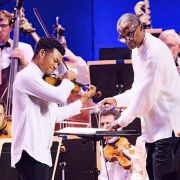
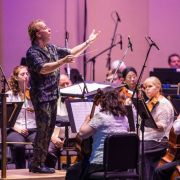
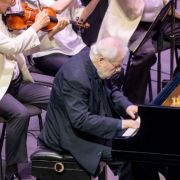
Yannick Nézet-Séguin doesn’t like applause between movements of a symphony. He’s been known to playfully wag a disapproving finger at Philadelphia Orchestra audiences who rush to show their appreciation by trampling over a rest. Yet even he couldn’t deny the energy in Marian Anderson Hall that met the ecstatic climax of the Allegro moderato in Sibelius’ Fifth Symphony. Turning from the podium to answer a woman’s spontaneous bravo, he offered a simple observation: “You’re right.”

Was she though? Having heard this symphony performed three times here in as many years, the build-up to that crashing conclusion sounded surprisingly piecemeal, all shock and awe without an underpinning logical progression. Coupled with imprecise intonation in the brass and woodwinds and some tentative playing throughout the first movement, this exciting but raggedy reading suggested a limited rehearsal period or lingering exhaustion at the end of the long Thanksgiving weekend. Matters improved as the symphony continued, with playfulness in the Andante and a lush volley between the violins and lower strings. Still, it took the presence of the entire orchestra before the power of the “Swan Hymn” truly came into focus, and in the end, one of the most artfully constructed symphonies in the repertoire landed with a surprisingly episodic quality.


María Dueñas made her subscription debut on the same program – but the Spanish-born, Vienna-based artist has already become a familiar face in these environs. Last year, she performed the Opening Night gala at the ripe old age of 20. Several months earlier, she was invited to headline, alongside Hélène Grimaud and Moby, the sole American concert celebrating the 125th anniversary of Deutsche Grammophon, for whom she records exclusively. The Philly audience has established a rapport with Dueñas, and they showed up to hear one of her specialties, Édouard Lalo’s Symphonie espagnole.
When I first heard Dueñas last year, I found that she possessed astonishing technique but lacked nuance and depth in her playing. Those elements are essential to Lalo’s difficult-to-characterize work, which draws on Spanish dance rhythms and folk traditions, fusing symphony and concerto into a form of anthropological musical tourism. Luckily, Dueñas’ style has greatly evolved over the past year, and her chameleon-like energy matched the music perfectly.
The penetrating tone of her violin – precise and passionate, though not especially pretty – leant an eerie quality to the habanera-inspired Allegro non troppo, adding edge to the ebullient sound produced by the orchestra under Nézet-Séguin. She moved effortlessly from the buoyant mood of the Scherzando to the weighty Intermezzo, with contralto notes phrased to mimic a Spanish folk singer. Dueñas seemed to whisper the opening phrases of the Andante above the orchestra’s delicate accompaniment, before letting loose in the finger-twisting finale.
Symphonie espagnole requires concentration and stamina over nearly 40 minutes of playing, and Dueñas delivered both with practiced ease. She encored with a hushed, introspective reading of Johan Halvorsen’s Veslemøys Sang.


After leading the premiere of Terence Blanchard’s Fire Shut Up in My Bones at the Metropolitan Opera, Nézet-Séguin commissioned a 17-minute suite for the Philadelphia Orchestra. My hope was that hearing excerpts of the score out of context would free them from the opera’s melodramatic excesses, but the music retained a surprising blandness that made it almost impossible to believe it was written by the same man who’s enlivened the sound world of so many Spike Lee movies. It’s easy to hear what Nézet-Séguin was after in his commission – a rich, enveloping string tone dominated most of the suite, this outfit’s bread and butter – but much of the music flowed together without distinction or direction. The most memorable passages cited American jazz and blues traditions, with distinctive contributions from the brass and percussion sections.