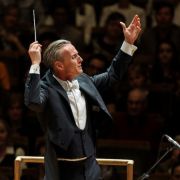
Two Viennese-based composers separated by less than a century – yet worlds apart in sound and sensibility – filled the National Symphony Orchestra Ireland’s Friday evening programme. Mozart’s sprightly Piano Concerto no. 15 in B flat major, ringing with joie de vivre, was set against Bruckner’s profound, final symphony, the elderly’s composer unwitting farewell to life. Guiding the NSOI through this striking contrast was conductor Anja Bihlmaier who shaped both works with assured musical insight.

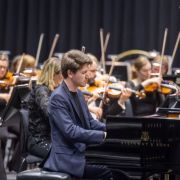
Mozart’s concerto illustrates the sophistication and inimitable style of a composer at the height of his powers. Mozart even wrote to his father claiming that this concerto was one “to make one sweat” and Boris Giltburg embraced its virtuosic demands with unwavering sensitivity. He shaped each phrase with a jeweller’s precision so that the music seemed to glow from within. His tone – classical, light, yet clearly projected – suited the quicksilver shifts of Mozart’s writing. The crisp staccato of the exposition sparkled with Champagne-like effervescence, while his fluid arpeggios glistened. Bihlmaier and the NSOI matched him with all the nimbleness of a chamber orchestra, revelling in the witty interplay between orchestra and soloist.


Sensitivity was the hallmark of the beautiful second movement. Here, Giltburg drew the delicate tendrils of his melody with a serene beauty. The orchestra responded with warm, intimate support creating an atmosphere of poised stillness. This moment of reflection was broken in an instant as the lively finale sprang to life. Giltburg’s broken octaves added a frisson of excitement and even in the most delicate moments, the piece sparkled with infectious energy. Bihlmaier maintained an ideal balance with the soloist, supportive but full of vitality too. The cadenza was tossed off with no little bravura, radiating sheer enjoyment.
If Mozart could produce works with seemingly effortless speed, then Bruckner was distinctly tortoise-like when it came to output. His final symphony was nine years in the making and death intervened before he could complete the final movement. With striking prescience, Bruckner suggested that his own Te Deum might serve as a substitute ending if required.
Given the proximity to the composer’s death and his ardent Catholic faith, the Ninth often hovers between the terror of the damned and the consoling radiance of grace. Bihlmaier understood this existential tension and brought it vividly to the fore. The seismic D–E flat climax landed with both terror and awe. Bihlmaier was at her most confident in the Scherzo, relishing its fury and pounding rhythms. A welcome respite arrived in the Trio, where she shifted deftly into a lighter, more playful mood, though all too briefly before the return of the elemental opening.


The Adagio, never intended as the symphony’s final word, emerged with luminous lyrical intensity. Bihlmaier shaped its narrative arc with conviction, even if occasional intonation issues surfaced as the movement unfolded. The strings shimmered before dissolving into silence, bringing Bruckner’s unfinished masterpiece to a haunting and deeply moving close.