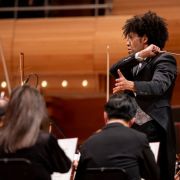
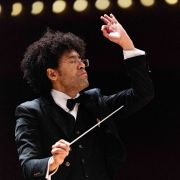
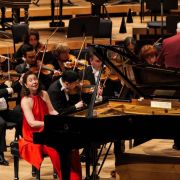
European emigres Erich Korngold and Béla Bartók reshaped American orchestral music in the mid-20th century – Korngold by infusing it with cinematic lyricism and opulence, Bartók by introducing a sharper-edged modernism that championed the folk music of his native Hungary. The Orchestre Symphonique de Montréal (OSM), conductor Rafael Payare and Dutch violinist Simone Lamsma came together in a program that included monumental works by these two immigrants to America.

Erich Korngold's Violin Concerto was the highlight of the evening. Lamsma's impassioned and profound interpretation made it impossible to dismiss this composition as mere cinematic glitz, despite the fact that Korngold was best known as a film composer and this concerto quotes themes from some of his Hollywood scores. Lamsma treated every phrase as a living, breathing line of poetry. In the Moderato Nobile, her conversational back and forth dovetailed beautifully with her OSM collaborators, the woodwinds in particular; her visual cues to her accompanists cemented that connection. Her rhapsodic take on this movement's extended quasi-cadenza section was fitting – fiery but not garish. In the subsequent Romance, Lamsma's sublimely contoured melodic lines soothed her audience, enveloping them in a blanket of tenderness. The soloist took on a chameleonic guise in the Finale, morphing from swaggerer to imp to scamp. Lamsma richly deserves her spot in the top tier of violin soloists on the circuit today.


From a showpiece for violin, we went on to a piece that expands the spotlight to the full ensemble: Bartók's superb Concerto for Orchestra. Payare and the OSM turned in a fervent reading which catapulted the notes off the page. In the Introduzione movement, the string and brass sections both played with verve – no "phoning it in" here. The contribution of the woodwind section in particular finessed the intrinsic iridescence of the Elegia. Christopher James on piccolo was an especial standout. A minor concern was that the second players should have played out more in the Giuoco delle coppie to better emphasize the harmonic contrasts which serve to demarcate the movement's successive couplings.
The concert had begun with Bernardino Molinari's arrangement of Claude Debussy's L'Isle joyeuse. A more nuanced approach from Payare would have better suited the impressionistic character of this little gem of the piano repertoire.
Overall, the quality of the OSM's music making is on the upswing as the level of trust and familiarity between conductor and players continues to accrue. One sensed that the attendees at this concert are becoming increasingly appreciative of their hometown orchestra.