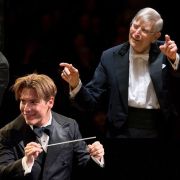
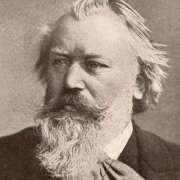
The thunderous chords of Brahms’ Tragic Overture burst forth into Marian Anderson Hall with mighty weight on 10th December, but it wasn’t the Philadelphia Orchestra that produced this sonic awe. Sure, Yannick Nézet-Séguin was on the podium and familiar faces like oboist Philippe Tondre and bassoonist Daniel Matsukawa occupied first-chair positions on stage. But instead of the resident forces, the audience came to hear the Chamber Orchestra of Europe, of which Nézet-Séguin is an honorary member and Tondre its Principal Oboe. With his customary flair for the dramatic, the conductor seemed intent on banishing the thought that this all-Brahms program might appear small-scale in comparison to the hall’s usual offerings.


Moments still emerged where a listener might have appreciated the opportunity to experience this orchestra in a European-sized concert hall, rather than the 2500-seat venue they occupied on this night. Nézet-Séguin sought a dark, imposing sound in the work’s tutti passages, which often came across as wan and underpowered when heard with reduced forces. His preference for brisk tempos and a bright, forward style undercut the mood that gave the piece its title. The woodwind section offered sui generis pleasures, anchored by the warmth of Tondre’s oboe solo, and the final bars echoed the gravity of the opening measures, which was largely not in evidence elsewhere. The spritely Academic Festival Overture might have made a more natural fit for this group.
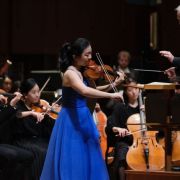
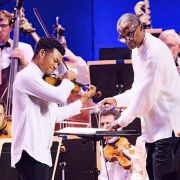
Nézet-Séguin recruited two copacetic soloists for the Double Concerto in A minor: violinist Veronika Eberle and Jean-Guihen Queyras. Brahms’ final major orchestral work functions almost as an extended dialogue between the two instruments rather than a developed conversation involving the orchestra, so it made sense for Eberle and Queyras to match their energies – particularly in the long first movement, where they appeared to mimic and even mock each other with their traded lines. The cello usually takes the lead in this piece, and Queyras set a tone that Eberle followed: whisper answered whisper, fire answered fire. The sound turned on a time from rich and plangent to folksy and threadbare, which especially helped the Romani-inspired Vivace non troppo. Nézet-Séguin did not dispel the sense of the orchestra’s role as a supporting player here, but he fostered a lovely mood in the contemplative Andante.


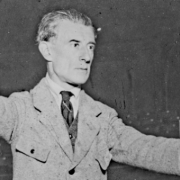
As an encore, Eberle and Queyras offered a taut, angular reading of the second movement from Ravel’s Sonata for Violin and Cello. Those who desire something simply beautiful for dessert might have been disappointed, but I appreciated the savory meal these two made of this unusual piece.
After releasing a Brahms symphony cycle with the COE last year, Nézet-Séguin’s approach to the First Symphony is something of a known commodity. Here as there, he conceived of the symphony as a unified, flowing account, eschewing the common conception of ecstatic outer movements cocooning an introspective middle section. There were perhaps fewer peaks and valleys than in an average contemporary performance, but the trade-off was a gripping sense of narrative that left a listener rapt. What more could you hope for in a program that traded so heavily on the familiar? In particular, Nézet-Séguin’s effortless segue from the third to fourth movements made a section that can often seem discursive and overwrought flow both with elegance and logic.