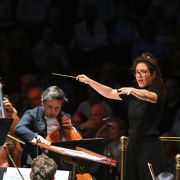
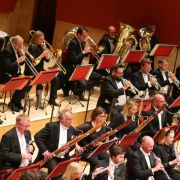
This traditional programme pillaged extracts from film and opera and drew on Czech folk music in a concoction billed ‘Hollywood Hit’. With a change of conductor – Sian Edwards replacing the Bournemouth Symphony Orchestra’s Principal Guest Conductor Chloe Van Soeterstède – Liszt’s once popular Les Préludes made way for Britten’s all too familiar Four Sea Interludes from Peter Grimes. In a way, this exchange made much sense, although one would have appreciated advance notice of the programme change unaltered in the Lighthouse’s publicity.

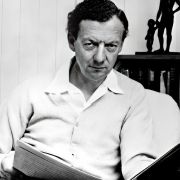
Nonetheless, the Britten served as a neat cinematic link to Korngold’s Violin Concerto in D major. Edwards and the BSO vividly summoned North Sea rollers during Dawn, its bleak intensity loaded with tragic import. Sunday Morning was a bustling concoction, its glittering detail conjuring a self-important community on its way to church. The slow processional that is Moonlight was initially hesitant but eventually gathered itself into a brooding climax, where tensions found release in a ferocious Storm, the BSO on blazing form and bringing Poole Harbour a little too close for comfort, its maelstrom delivered with apocalyptic fervour.


Wunderkind and adopted American Erich Korngold was a composer renowned for his swashbuckling movie scores. His Violin Concerto, now a staple of the repertoire, was once a favourite with Jascha Heifetz. Conceived in 1945, long after the composer had moved to Hollywood, it combines expansive lyricism with untamed virtuosity, both qualities outlined clearly by the Chinese soloist Ning Feng. While possessing a formidable technique, this performance felt episodic; the contrasting tension and release throughout the first movement never quite cohered, giving the impression of disconnected paragraphs. Celesta and vibraphone made a distinctive presence in the Romance, where wistfulness rather than schmaltz was much in evidence, Feng’s pearly tone soaring over Korngold’s sumptuous scoring with much warmth of expression though not quite tugging at the heartstrings. The rumbunctious finale showcased Feng’s athleticism as he and the orchestra made a homicidal dash to the finishing post, exhilarating to the very end. Feng returned to the platform to present the Andante from Bach’s Violin Sonata no. 2 in A minor, BWV1003.
It was Dvořák’s turn after the interval with his Sixth Symphony, a work that remains in the shadows of his next (and last) three symphonies. Judging from this performance its four movements have much to recommend it, not least the exuberant Scherzo and an opening Allegro with a theme declared by Eduard Hanslick as “a real winner, a true symphonic theme, simple, powerful, as if cast in bronze”. Certainly, Edwards shaped its melodic contours and classical structure (exposition repeat observed here) with clear signposting, neatly integrating grandeur and tenderness. If a Beethovenian muscularity coloured the first movement (notwithstanding an architectural debt to Brahms), the second was a pastoral affair, its rolling hills and meandering rivers evocatively caught, with woodwind and horns unfailingly eloquent and strings generating some rapt pianissimos. Its idyll came to an end with the bucolic Scherzo, a thoroughly Slavonic movement, its cross rhythms vigorously accented and a beguiling piccolo adding folk influences to its central Trio. The Finale was given a full-blooded outing, where excitement was never in question, but despite periodic calm, its rendition felt overheated.