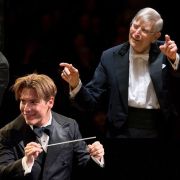
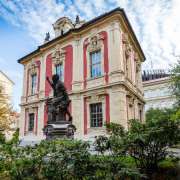
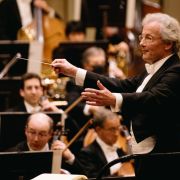
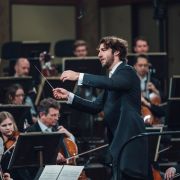
At the Wiener Konzerthaus, the Vienna Philharmonic, conducted by Jakub Hrůša, presented a compelling departure from its core Austro-German repertoire with a varied, well-curated program of Central European masterworks. The concert was a deep dive into the varied sound worlds of Hungary, Bohemia and Moravia, showcasing the orchestra’s adaptability and Hrůša’s deep affinity for this literature.

The evening opened with Zoltán Kodály’s vibrant Dances of Galánta. Drawing on 19th-century verbunkos traditions, the work is a colorful, rhythmically elastic showcase. Hrůša, whose career has long been steeped in this repertoire, drove the orchestra purposefully through its twists and turns. Kodály’s idiom is propelled less by emphatic downbeats than by off-beat accents and constantly shifting internal pulses, pulling players and listeners alike into wonderfully unexpected polyphonic currents.The performance was both graceful and filigreed, with especially lovely woodwind solos shining through otherwise busily transparent textures.


Béla Bartók’s Suite from The Miraculous Mandarin followed, still startling in its raw urban modernity. A far cry from Bartók’s folk-song associations, the score bristles with aggressive rhythms, accented off-beats and visceral orchestral effects – whipping figures, percussive string strokes, trombone glissandi and brutal climaxes that evoke the ballet’s violent, seedy pantomime origins. The Philharmoniker’s virtuosity was on full display; so dense and intricate is the writing that one could jokingly imagine the orchestra self-funding Vienna’s recently defunded Sommernachtskonzert if paid per note played... While the complexity presented occasional challenges, the overall effect was electrifying, building to a finale that slaps and grooves; the final pages, almost obscene in their swagger, landed strongly for a cathartic close.

Post-intermission, Antonín Dvořák’s symphonic poem The Wood Dove – far and away the most familiar works on the program tonight – offered haunting lyricism. Based on a tragic ballad by Karel Jaromír Erben, the piece is a study in instrumental layering and balladic storytelling. The strings, especially the aching violin lines, palpably evoked the widow’s remorse and the dove’s accusing cry, weaving a tapestry somewhere between program music and pure, melancholic folklore. The melody, one of Dvořák’s most memorable, lingered long after the last, resigned chord.


The concert concluded with Leoš Janáček’s rhapsodic Taras Bulba. True to the composer’s nápěvky mluvy (speech-melody) aesthetic, the work is a constantly shifting landscape of harmony and motif. The first movement’s oscillation between lyrical love themes and violent military intrusions was powerfully rendered, featuring superb double-reed solos. The finale built to an overwhelming apotheosis, with organ and bells joining the orchestra in a smattering of fiery, motivic flashes.
While not the most seamlessly unified playing from this legendary ensemble – a testament to the music’s fierce difficulty – the commitment and colors were both magnificent. This was a rewarding journey just slightly eastward, brilliantly illuminating the rich diversity overlapping local, Austrian borders.