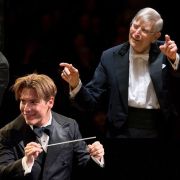
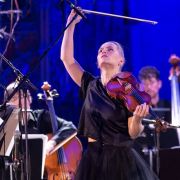
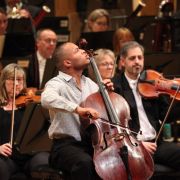
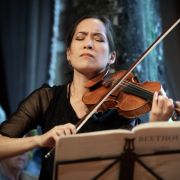
At a pre-concert talk at the National Concert Hall, American pianist Michelle Cann revealed how, since she recently gave birth, she has felt extra surges of adrenaline. Energy was indeed in bounteous supply for her riveting performance of Florence Price's Piano Concerto in One Movement with the National Symphony Orchestra Ireland under the baton of Patrik Ringborg.

Price was the first Black woman to have a symphony performed by a major American orchestra when the Chicago Symphony Orchestra programmed her Symphony in E minor in 1933. Much of her music remained unpublished, however, and it is only within the last decade that more of her works have come into circulation following the discovery of a substantial collection of her works in her dilapidated summer house on the outskirts of St Anne, Illinois.


Influences of the Romantics run strong in her concerto, but with a wonderful slant towards spirituals and African-American rhythms. The first movement is filled with finger-challenging arpeggios, wrapping around a theme that sounds like it could be sung by a gospel choir but was Price's own invention. Ditto for the lovely Adagio cantabile, which begins as a duet for piano and oboe and expands to the rest of the orchestra, a taste of a lazy summer day. The concerto ends with a brief Andantino-Allegretto that incorporates Juba dance rhythm and leads to a rousing, drum-thumping finale that brought the Dublin audience to its feet, if not to dancing in the aisles.
Cann played like she was on fire but had energy left for an encore of another African-American woman composer, Hazel Scott, whose mother convinced Juilliard to teach her piano at the age of eight and who went on to have a career in jazz and film. Scott's riff on Rachmaninov in her Prelude in C sharp minor begins as written but within seconds erupts into flights of fancy up and down the keyboard, piano bar music on steroids. Cann pulled it off with panache.

The concert opened with a charming but wistful performance of the late Russian composer Sofia Gubaidulina's Fairytale Poem. The piece was inspired by the tale of a piece of chalk that wants to draw castles and gardens but is used in school for boring words and numbers. The chalk is discarded when it becomes too small but is salvaged by a boy who uses it to draw precisely what the chalk has always dreamt of, making her blissfully happy as she disappears into nothingness. Delicate work by the harps, strings and piano made this work, which also fades to nothingness, a delight.


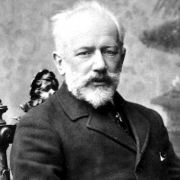
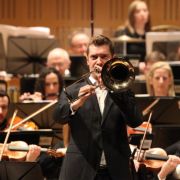
The NSOI had its own moment to shine in the second half rendition of selections from Tchaikovsky's seasonal ballet The Nutcracker. Some may ask why play it without dancers, but Ringborg compensated, waltzing and dancing on the podium through much of the performance. At the same time, he elicited some fine playing from the brass, for the Act 1 March, the winds in the Act 2 Scene and a truly marvellous trumpet solo in the Spanish Dance. Bring on the Christmas puds!