It’s December. Cue mince-pies, garish Christmas jumpers and performances of Handel’s Messiah. As one wanders through supermarkets besieged by the endless piped refrain of Band Aid, there is something rather reassuring in reflecting that a hit whose purpose was to raise money for those blighted by famine in Ethiopia has a link to an oratorio written centuries before. The Dublin premiere of Messiah in April 1742 was what we would now describe as a benefit concert, with audiences exhorted to dress sensibly to allow as many people to squeeze into the hall as possible. Many subsequent performances, often conducted by Handel himself, also saw the proceeds donated to charity, prompting Charles Burney to make his famous comment that Messiah “fed the hungry, clothed the naked and fostered the orphan more than any single musical production in this or any other country.”


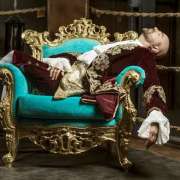
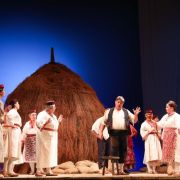
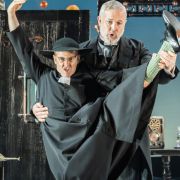
This humanist theme fitted well into Wild Arts’ preamble, delivered confidently by Edward Hawkins at Smith Square Hall. This is the third winter tour of Wild Arts’ production of Messiah, a form of staging which reduces the numbers down to eight singers and a handful of players. A Messiah fan will miss the chorus, but the work’s reduction is sensitive and there were no balance issues. Director Tom Morris brings an immersive element to the production; the performers, in modern dress, are drawn from us and we bear witness to their struggles and joys as they grapple with events the oratorio depicts, departing from the stage to stand among, and interact with, the audience. It can be quite intense – my companion was slightly disconcerted to be directly encouraged to “rejoice greatly, daughter of Zion” – but while I am not convinced that Messiah adapts well to staging, it did bring out a sense of conviction that overlay much of the text with a sense of ‘real world’ meaning and urgency.
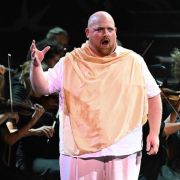
Among the singers, Edward Hawkins’ fuliginous bass and paternal presence among the community of singers stood out, while the highlight of the evening was a deeply plangent “I know that my Redeemer liveth” from Joanna Songi, thoughtfully phrased and delivered with even tone and a crisp higher register. Kate Symonds-Joy’s pointed mezzo sang with an angular fervour, while Guy Elliott’s bright tenor opened the evening with a lyrical “Comfort ye”.


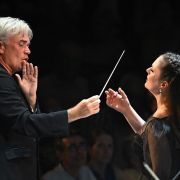
Curious, though, to say about an oratorio, but it was the players of the Wild Arts Ensemble that gave the greatest pleasure; Orlando Jopling directed his musicians from the harpsichord in an interpretation that combined chamber intimacy with a sense of scale. String colour was burnished and vibrant, while the woodwind contribution – just two oboes and a bassoon – had an ethereal texture that lifted the ensemble. Trumpeters Sam Lewis and Brendan Musk, deployed at the altar, delighted the ear with pert and agile performances.
This was not a definitive Messiah, and by no means musically perfect, but Wild Arts succeeded in breaching the barrier between performer and audience to create quite a moving Christmas experience.