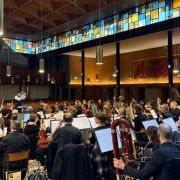
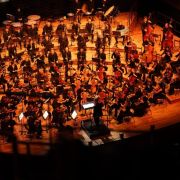
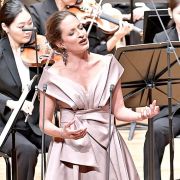
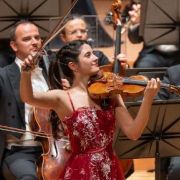
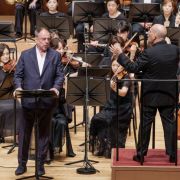
At Seoul Arts Center, Daniel Harding and the Orchestra dell’Accademia Nazionale di Santa Cecilia chose proportion over spectacle. Verdi’s overture to Les Vêpres siciliennes was cool-headed and cleanly drawn: a Largo in long breaths, winds set with neat spacing, and an Allegro agitato that stayed transparent even when the tuttis might have welcomed more operatic bite.

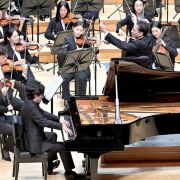
As if echoing the first snow whitening the plaza outside, Ravel’s Piano Concerto in G major arrived in an unfamiliar light. Yunchan Lim treated it less as inherited repertoire than as a fresh track across untouched powder – first footsteps, not footprints retraced. The opening was finely gauged, almost tentative; then, in the glissando passage, he refused the usual splash, instead nudging the tension upward as though turning an audio volume dial in one steady motion. The whole up-and-down figure was gathered into a single, steadily swelling phrase.


Lim kept the standard jazz-and-blues perfume at arm’s length. He set the dynamic floor low and built from precision: attacks that landed square, a pulse that never loosened. Repeated-note cells dotted the air like sleet – each pellet distinct – while octave chains held to a firm internal grid. Staccato flashes sparked without grinding harmony. More striking were the sudden inward withdrawals. In both exposition and recapitulation he drew sound sharply back, dropping the volume as if compressing the hall’s acoustic into a smaller chamber. When the harp entered, it appeared from far away; the piano answered in a reflective, slightly retrospective tint, tone with grain and patina, like a photograph from vintage Agfa stock.
The E major Adagio, a long sentence that must support itself without help, was Lim at his most persuasive. He carried the melody on a thin but unbroken filament of tone, pedalling sparingly so inner voices stayed readable while the line kept its glow. Now and then a faint Russian inwardness surfaced, but it registered not as borrowed accent, more like a private dialect. In the Presto finale he favoured diction over blunt impact. Even at speed the sixteenth-notes stayed level, cross-rhythms clicked into place and the jazz-shaped figures hinted at swing without caricature. One could imagine a heavier bass thump or a more reckless final shove, yet the through-line never lost its grip.

Rachmaninov's Symphony no. 2 in E minor extended the evening's climate, a kind of ‘rigorous hygiene’, winter air with the damp fog wrung out. Dynamics rose in terraces, snow laying itself down by layers, and the polyphony stayed in open view. Harding began at a true pianissimo with pulse, and when the Allegro moderato set off, the themes were allowed room to breathe rather than forced into instant heat. The Santa Cecilia's sound was often lean and lucid; first and second violins layered like dragonfly wings, occasionally underfed. Harding kept shifting perspective between chamber-like transparency and full orchestral weight; an attractive alternation that, across the longest spans, sometimes cost momentum.


Detail, however, remained sharp. The Scherzo’s bell-like figure spoke cleanly, the Trio held a resilient mezzo-piano, and tempo returns were tidy. The Adagio avoided sentimental slush: a clarinet line with restrained vibrato, strings that rationed portamento. At its great peak, though, one missed a fuller bloom and firmer emotional ballast. The finale refused the easy dash, drawing propulsion from rhythmic spine and an articulate bass. Brass glittered without smearing and the last pages kept counterpoint clear to the end.
Leaving the concert, the first snow scattered like grain on an old reel, white noise in the plaza lights. We walked on, rubbing at the glass-dust lodged within. Those dry particles, the damp of feeling wiped away, were burning sharper than the winter air.