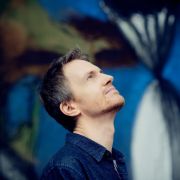
What a debut Canadian pianist Jaeden Izik-Dzurko made at Wigmore Hall last night! At just 26 years old, he demonstrated impressive maturity in a challenging yet interesting programme. As 2024 Leeds International Piano Competition winner, his virtuosic prowess was unlikely to be in any doubt, and this was indeed astonishing, but what impressed even more was the sensitivity and deep emotional expression, often lacking from young virtuosi, especially, ironically, in high Romantic repertoire.

Opening with the Bach’s Partita no. 4 in D major, there was an immediate sense of knuckling down, with intense focus. The Ouverture began with a somewhat weighty sound, thankfully quickly contrasted by a more delicate touch, and florid ornaments and trills were effortlessly nimble, running smooth and circling the fugal lines in the second part. His touch lightened further, with a graceful Allemande and a gently dancing Courante, and he wasn’t afraid to subtly play a little with the rhythm in the Aria’s repeat, while time almost stood still in the Sarabande’s questioning rests. The Minuet skipped along, before defiant fugal entries gave the Gigue bright energy. This was impressively mature Bach, setting out his stall as way more than a firework display.


From there, Izik-Dzurko jumped headfirst into the programme’s Romantic repertoire. Franck’s Prelude, Chorale and Fugue has its roots in Bach, but he was aiming his sights much more in the direction of Liszt, its scale unashamedly vast. Izik-Dzurko’s opening Prelude was flowing and opaque, with the yearning melodic line surrounded by effortless cascades. The Chorale’s rich, dark chords built to a weighty climax, but not before some deft hand-crossing to pick out a remarkably smooth line over low dark chords, and the final Fugue built up to magnificent orchestral textures, before bringing back ideas from the Prelude and Chorale, to conclude with bells pealing out over wild rapids.
We jumped forward some 14 years to 1900 for Scriabin’s Fantasie, Op.28, and while not yet reaching the level of chromaticism and atonality of his later output, it is a work full of extremes. Once the softly-pedalled opening was out of the way, Izik-Dzurko relished its dark surges and thick textures, with increasingly wild explosions. Yet in the middle, he pared everything back to allow a delicate melody to emerge over dreamy pedalling. But Scriabin’s wild impetuousness returned and the climax, when it came, was suitably gigantic. Here, as elsewhere, Izik-Dzurko showed he has the big guns, but also subtlety and finesse, and a deep understanding of this expressive yet at times darkly introspective work.
The ultimate Romantic expression of the evening arrived with Rachmaninov’s set of Op.23 Preludes. From the first, with a singing right hand over the softly questioning left, to the last, now with pulsing right hand and its lyrical Chopinesque left-hand melody, Izik-Dzurko constantly headlined Rachmaninov’s vocal lines. In between, we had wild cascades in No.2, this time the tenor melody shining through, and a glassy, balletic conclusion to No.3. A folksy No.5, with a limpid middle section, and incredibly fast moving fingers for the urgent, Scherzo-like No.9, this was an impressive reading throughout, capturing Rachmaninov’s shifts of mood, all with highly expressive and expansive tone.


His first encore, Medtner’s Skazki (Fairy Tale), Op.51 no.6, was full of playful, circus high-wire tricks, but he really let his hair down for his second encore, fellow Canadian Oscar Peterson’s Place St Henri, showing off a freer, joyful side that the evening’s weightier repertoire had not allowed him to reveal. Izik-Dzurko is definitely a talent to watch, and I am sure there’s a lot more to come.