Bach’s Christmas Oratorio is a sublime masterpiece and a seasonal joy. Consumed in one sitting, however, it’s also very long. So while I’m always delighted to get the chance to hear it, I’m also quietly pleased when it’s slimmed down in some way.

This performance from French Baroque royalty Les Arts Florissants fitted that bill nicely by presenting only four out of the six cantatas, though this is a combination (1, 3 5 & 6) that I’d never experienced before, and I’m not entirely sure it worked. Cutting out half of the Shepherds’ scene felt like taking a short cut to the Wise Men, and the third cantata felt like it had been included to get maximum use out of the trumpets and drums instead of getting horns to play for the fourth.


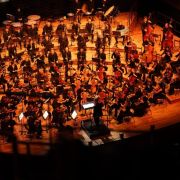
That’s not really much to complain about, however, at least not when those trumpets and drums were played as persuasively as here. Sitting close to the front of the Philharmonie’s Stalls, I fully expected that opening of the first cantata to hit me between the eyeballs like a musico-theological boxing glove. Not at all. Instead, where a British or a German ensemble might take that opening like an earnest stomp, Les Arts Flo played it with gallic restraint and a winning dose of panache seasoned with élan. Rather than open with a sucker punch, the music grew from a gentle beginning, reaching its climax only when the choir entered.
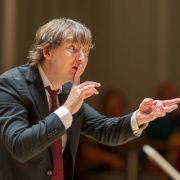
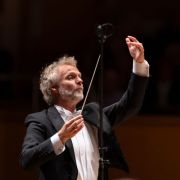
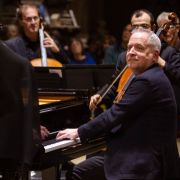
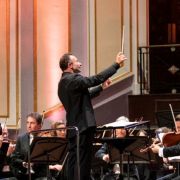
Paul Agnew conducted this, and indeed the whole evening, as though he was dancing gently across the stage, a casual wave of a hand or lean of his shoulders accentuating a beat or caressing a particularly beguiling stretch of melody. And there was a lot to beguile, not least because, unusually in the period performance world, the strings played with lots of vibrato. This meant that beauty sometimes came at the expense of balance – the flutes, in particular, struggled to be heard in the sound picture – but Agnew did coax some gorgeous solos out of his oboes and from leader Tami Troman.
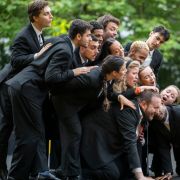
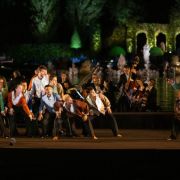
The chorus of 13 sang with clarity and bounce, particularly impressive in the busy chorus that opens the fifth cantata, and the acoustic of the Grande Salle Pierre Boulez meant that they sounded distinctly crisp, almost individually distinguishable from one another. The soloists were all drawn from the chorus. Soprano Miriam Allan melded innocence with beauty, particularly appealing in “Nur ein Wink”, and bass Andreas Wolf sang his arias with honeyed sincerity. Tenor Bastien Rimondi sang with as much dramatic as spiritual involvement. Only mezzo Lucile Richardot seemed a little distanced due to her prominent vibrato.


None challenged the marvellous Evangelist of Nick Pritchard. I’ve previously only heard (and very much enjoyed) him in English-language repertoire, but he coloured every nuance of the text with insight and subtlety, relishing his consonants on words like “König Herodes”, and used the beauty of his voice to involve the audience more deeply in the story.
Agnew insisted on finishing with a mass participation chorale, which felt like a shame. I’d rather have been sent out with the professional polish of the final chorus ringing in my ears, rather than the dubious intonation of two thousand unrehearsed audience members. However, that didn’t detract from the power of this extremely refined and uniquely French take on the Oratorio do Noël.