“In the twinkling of an eye.” By luck or design, the surtitles at the electrifying climax of the Philharmonia’s 80th birthday season performance of Mahler’s monumental Second Symphony translated the composer’s secular hope of resurrection in the familiar phrase from the biblical text that tells us “the trumpet shall sound”. It’s a verse that will have been only too familiar (no doubt from many performances of Messiah) to the concert’s dedicatee, the late and much-loved former Principal Trumpet of the Philharmonia, John Wallace, who died in January. There are ten trumpets in Mahler’s Resurrection Symphony, four of them off-stage. There was certainly one more out there on Thursday night.

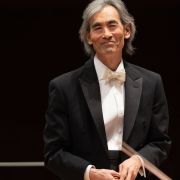
The Philharmonia Orchestra joined their considerable forces with the Philharmonia Chorus under the baton of Kent Nagano for a ride to beat any rollercoaster. Epic in scope and and thrilling in its intricacy, Mahler’s Resurrection calls for gigantic forces and consummate control. Nagano’s deceptively light-touch technique – rarely raising the baton above elbow height, sometimes doing no more than simply opening his left hand – worked miracles. If there were the very occasional moments in this vast and complex piece where the ensemble gave a hint of teetering on the brink, it only made the pinpoint precision elsewhere all the sharper and added to the edge-of-the-seat sense of exhilaration. And anyway, we were all here to be redeemed by the divine power of art made by fallible humans.
With so much shock and awe to come, Mahler was keen that audiences had a chance for contemplation before the opening attack of the funereal first movement, so he would have approved of the magical idea – though of course he would never have known of her – of opening proceedings with Hildegard Von Bingen’s spare and sinuous O vis aeternitas sung by a semi-chorus processing slowly through the auditorium, their voices wreathing the hall like a trail of incense.
As the procession disappeared offstage, Nagano’s decisive downbeat propelled us through time and space by about 700 years, the cellos and basses asserting their march through the Allegro maestoso. Nagano made the most of every detail, from bristling col legno to Hollywood-grade vibrato in the violins and a dizzying number of expertly-handled cliffhanger moments. The Andante moderato was as gentle and shy as any Viennese wallflower, the closing pizzicato so slight as to be not much more than a movement of the air. A relaxed, pastoral tempo allowed the mysterious watery world of the third movement to play out in all its serpentine intrigue, before the horns and brass took control and the mercurial turned majestic. Christina Bock stood and began Urlicht in a rich, round and perfectly Mahlerian tone that was nonetheless as fresh and disarmingly conversational; meanwhile, the offstage band achieved such an ethereal pianissimo, we might have imagined it.
The mighty Philharmonia Chorus have made the big, middle-European romantic sound their own and their exhortation to “Rise again” as the final movement got underway revealed a whole new dimension in sound, with Jane Archibald’s golden glow of a soprano emerging almost imperceptibly from within it before blooming like a sunrise.
Any performance of Mahler’s Resurrection Symphony is an event: the logistics in marshalling one of the repertoire’s least cost-effective performer-to-audience ratios is, in itself, an achievement. But nobody in the Royal Festival Hall on Thursday can have been in any doubt: moments like this are what life is for.