Sunday afternoon concerts in Edinburgh’s Usher Hall can be sleepy affairs. Regardless of the quality of what’s on offer, the hall is often lucky to be half full, a dispiriting business for the audience members who do show up, let alone the musicians on stage. So why was this one sold out? Surely it’s because the BBC Scottish Symphony Orchestra performed what probably qualifies as the world’s most popular piano concerto, Rachmaninov’s Second, which has an audience-pulling power possessed by few other works in the world of classical music.

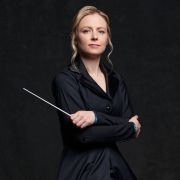
And nobody who heard this performance can surely have gone home disappointed. It may have been light on fireworks, but it was high on musicality which, therefore, made it all the more treasurable. Pianist Alessio Bax was very much the music’s servant and, unlike many showier pianists, he never used it to draw attention to himself. After the steady solo opening, he subsided into the background while the strings, dark and sweeping, presented their main theme, and then his piano wandered unobtrusively into the limelight for the second theme. Throughout there was an overarching lyricism to his playing, never once sounding ostentatious, even in the most muscular passages, and he kept things moving in the slow movement, refusing merely to wallow in the music’s beauty. Conductor Gemma New captured impressively the music’s sweep, conducting with plenty of rubato when needed so as to allow the audience revel in those emotional climaxes. After all, that’s the reason everybody came, wasn’t it?
Yet the real treasure in the programme came in a scorching performance of Barber’s Symphony no. 1. For my money, this is a piece even more tautly constructed and dramatically gripping than Sibelius’ Seventh, another one-movement symphony to which it’s often compared, and this performance seemed to inhabit that wonderfully, bursting out of the starting blocks with a terrifically assertive opening and progressing with a tremendous sense of scale, featuring lush strings that wouldn’t have sounded out of place in a Hollywood soundtrack. New shaped its great waves of sound with masterful skill, be it the energetic syncopations of the first half or the downy soft atmosphere of the slow section, and she painted each theme with distinctive colour and stirring confidence, allowing the music’s architecture to work its own magic. The fleet-footed Scherzo was held aloft by quicksilver wind solos that in the slow movement softened into objects of beautiful allure, shimmering over the most gorgeous bed of strings. The ending carried electric intensity and the audience, as though pleasantly surprised by what they’d encountered, cheered it to the rafters.
The rest of the concert couldn’t quite live up to that. A full symphony orchestra has a string section that’s almost inevitably too large to bring out fully the filigree delicacy that Ravel’s Tombeau de Couperin needs. Persuasive as was the Prélude’s opening ripple, the concluding Riguadon felt far too heavy. And while John Adams’ Short Ride in a Fast Machine is always tremendous fun, it’s a piece that screams “filler”, and seemed unnecessary in a concert that already had three substantial items in it.