If you’re going to go out, then you might as well go out in style. With their end-of-season concert the Royal Scottish National Orchestra did exactly that in a blockbuster that showcased what the wider RSNO family can do when they’re at their very best.

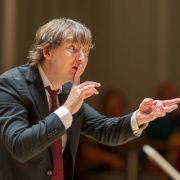
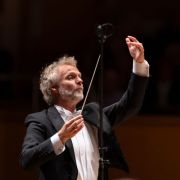
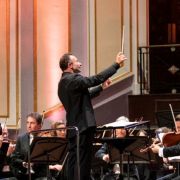
The orchestra has been grabbing the headlines recently because of a change at the top: Music Director Thomas Søndergård is due to stand down in a year’s time and will be replaced by Giedrė Šlekytė, whose debut with them back in December impressed me hugely. Beneath the apex of the pyramid, however, their Principal Guest Conductor, Patrick Hahn, continues to deliver concerts of the very highest quality, as this performance of Beethoven’s Ninth Symphony demonstrated in spades.


Hahn is a thinker and, judging by the way the orchestra played for him, a motivator. His approach to what has a good claim to be the central work of western classical music was one that refused to be intimidated by the piece’s reputation. Under his baton it sounded lithe, agile and nippy, like an Olympic athlete rather than a granite monument. Nowhere was that clearer than in the Scherzo, which I don’t remember ever hearing sound more like a dance; light on its feet and so winningly nippy that I found my shoulders shoogling involuntarily as I listened. The slow movement unfolded with more expansive breadth but was always propelled forwards with metronomic momentum, and the end of the finale careered ecstatically over the finish line in a way that really fulfilled the joy of the finale’s text.
There was weight and momentum to spare, however, the sort that you really only get when it’s performed by a full-sized symphony orchestra. For all its speed, the first movement still managed a pile-driving climax and palpable dread in the coda, while the finale rang with steady nobility. Yet the players of the RSNO played with chamber orchestra precision that allowed the energy to burst forth while simultaneously managing details like the gorgeous sheen of vibrato on the strings in the transportingly beautiful Adagio, or the light-hearted merriment of the remarkably fast ‘Turkish’ section.


All of this only comes together when there’s a conductor who is clear about his vision and who can carry his musicians with him. Hahn had thought through every detail, and that was palpable in every well-turned phrase and carefully shaded dynamic. It even transferred over to the RSNO Chorus, who sang with both heft and beauty in music that is often, to use a technical term, a bit of a yell, and they were dashed impressive in the varied moods of the mystical final stanza. Add in a heavenly quartet of soloists, particularly the bright-voiced tenor of Joshua Ellicott, and you had a Beethoven 9 that, for once, lived up to the work’s reputation.
With such a triumph in the concert’s second half, it was easy to overlook the two gems from before the interval, lesser in scale but just as precious. Before singing in the symphony, mezzo Karen Cargill was soloist for Sir James MacMillan’s Three Scottish Songs, which she sang with a Lieder artist’s intensity and the communicative directness of a folk singer. All this came after a Hebrides Overture that was brisk and propulsive with a lovely sense of swell, Hahn pointing every phrase carefully, and brining out both the chocolaty dark tone of the middle strings and the heavenly clarinet solo of Timothy Orpen.