This evening's theme was to explore how varied variations on a theme can be. Three European émigré composers working in the 1930s and ’40s looked back to their musical influences and reimagined their chosen works in the light of modernity with contrasting approaches and results. This was an interesting concept and the interpretation of all three works by Kazuki Yamada, Nelson Goerner and the City of Birmingham Symphony Orchestra took this event beyond intriguing to fascinating.

Paul Hindemith’s Symphonic Metamorphosis of the Themes of Carl Maria von Weber is not a work that is shy in coming forward. It begins with high impact and, under Yamada’s baton, it continued driving relentlessly onward, the sections of the orchestra churning the deconstructed themes like cogs in a giant sound machine. Although there is a moment of genuine beauty and enchantment in the opening woodwind of the Andantino, any such sentimentality was firmly quashed with the brass chorale fanfare opening the March. The dominant feel of the work is in its ineluctable power as Weber’s themes are stripped of Romantic sensibilities and surge forward in the wake of progress. In a masterful interpretation, Yamada did not let the intensity subside for an instant and propelled the persistent machinery to its inevitable and emphatic finale.
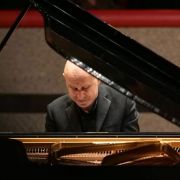
‘Subtle nuances’ is not an adjective-noun combination one would readily apply to Hindemith’s Symphonic Metamorphosis, but both subtlety and nuance were at the very forefront of Nelson Goerner’s rendition of Sergei Rachmaninov’s Rhapsody on a Theme of Paganini. Every phrase was perfectly shaped and measured, full of variation and character, yet retained the capriciousness so vital to a responsive performance. Yamada kept the CBSO tightly controlled so that the orchestration did not distract from the virtuosic piano. Indeed, I was so gripped by Goerner’s playing that the orchestra seemed to periodically dissolve from my consciousness. This was my first time hearing Goerner, and this extremely positive initial impression was further enhanced by the mutual understanding he shared with Yamada.

Rachmaninov stole the show, but that was probably due to my personal preference for melodic composition over the deconstruction-reconstruction and rather brutal approach of Hindemith. Béla Bartók’s approach to reimagining Eastern European folk tunes in his Concerto for Orchestra contrasted the simplicity of the tunes with complexity in their orchestration. In the bold brass fanfares one can detect a national pride in the heyday of Austro-Hungarian influence, and in the woodwinds one can detect sympathy with the strains of communal rural peasantry. As with the Hindemith, there are occasional brief glimpses of beauty in the mix, and while the levels of intensity are similar, Bartók’s work retains a sensibility of nostalgia and is the richer for it.
The Concerto for Orchestra afforded the CBSO an opportunity to display its full power and virtuosity, Yamada making sure that the opportunity was exploited to the full extent. This was an ambitious performance superbly executed. Yamada continued to challenge the orchestra, and he pushed the dynamic range to its limits in all directions of volume and tempo. The complexity of the ‘concerto’ was evident to the ear, but also to the eye. When the work concluded, a universal sigh expressed both relief and satisfaction that they had nailed it. The applause that followed was extended by the need for Yamada to acknowledge every single section of the orchestra, and rightly so.