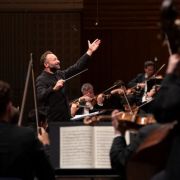
It is only when Raphaël Pichon unleashes the final chord, sharp as a whipcrack, that the audience feels liberated from the vice-like grip that has gradually enveloped them since the beginning of Werther at the Opéra-Comique. Throughout the first half, the fundamentally good-natured and harmonious atmosphere created by the orchestral forces of Pygmalion has been deceptive. There has been a palpable sense of a growing threat lurking behind this domestic scene, where Le Bailli rehearses Christmas carols with the children in July. Tragedy is indeed inevitable: Werther loves Charlotte, who is engaged to Albert. A six-month affair, between summer and Christmas.

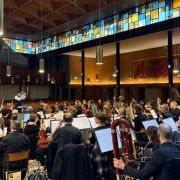
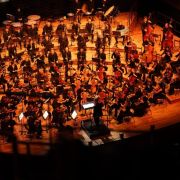
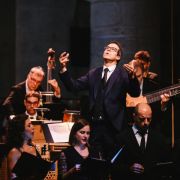
The drama is intimate, and Pichon is committed to this approach. To work as closely as possible with the sound of Massenet's score, here in Salle Favart where the work was premiered in 1893, he arranges and conducts the orchestra in such a way as to highlight the warm colours and chamber music spirit of a composition in which the variations in mood and timbre between instruments echo the unreasonable dialogue between the characters' hearts and souls. Massenet, the colourist, would certainly have been astonished by the warm and enveloping sound of Joakim Cielsa's alto saxophone in Charlotte's aria “Va ! laisse couler mes larmes” (Go! Let my tears flow). But it is Marion Sicouly's harp that plays the electrocardiogram of the work, an autopsy of a simple heart, where each plucked note is like a drop of poison added to the previous one.


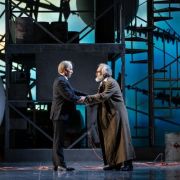
Pichon holds us in his grasp, relentless, unyielding, leaving nothing to chance, building this long-term trajectory. At the interval, the suspense is truly at its peak. Through sharp Herrmann-Hitchcock-style accents, Pichon establishes a climax in the middle of the second half of the evening, when Werther returns, haggard, to Charlotte's home. This is the only moment when the orchestra literally roars, but always dryly, stripped to the bone, minimising the effects of emphasis. The conductor tightens and compresses incessantly, as if to banish once and for all a certain facile, deceptive romanticism, far removed from our time. In this sense, he is perfectly aligned with Ted Huffman’s staging, which deliberately avoids any effusiveness in order to portray a distraught and powerless Charlotte, trapped in her situation, and a Werther who reveals nothing, champing at the bit to the point of torture.
Some may be surprised by the director's literal approach, in this production where everything that is said is what is shown, but all is not what it appears. The contemporary simplicity of an empty stage occupied only by the props necessary for the action is combined with formidable dramatic effectiveness in the direction of the singers, which above all lays bare the issues at stake, the text and the actors themselves. Seldom has the libretto been heard so clearly. In straight theatre, Alain Françon is the leading figure in the kind of contemporary classicism, in which texts often acquire a timeless acuity and truth. With this Werther, Huffman is part of this school.

In terms of set design, a long, slow change of lighting is enough to convey the passing of the evening just before the guests return from the ball in Act 1. It is these details, which could be multiplied ad infinitum, that say a lot about the naturalistic and lively approach of this production: Charlotte praying to God, sitting cross-legged; Werther really reading his verses in his “Pourquoi me réveiller” or, on his entrance, simply reciting his verses to nature as he sits at the edge of the stage, above the orchestra.


As Sophie, Julie Roset is impeccably fresh, natural and spontaneous, flying through her part like the laughing bird she sings about so skilfully in Act 3. Similarly, Adèle Charvet, porous to the drama that falls upon her shoulders, is sumptuous as Charlotte. She ventures into such heartfelt emotions – her eruptive “Go!” to let her tears flow. As Albert, John Chest, discreetly smug, is the third wheel we need.

In the title role, Pene Pati could have been the great hero of the evening if he hadn't had a few hiccups in the first half, and especially if he had allowed himself to be more affected by the psychological exposure that Huffman offers him in this project, which calls for great technical skill in acting. If he pushed the clumsy and awkward side of his character further, the Samoan tenor could move us deeply. It is up to him to make the most of the remaining performances in this productin, which is as ambitious musically as it is theatrically.
Translated from French by David Karlin