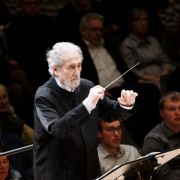
The Passion of Christ is by no means the exclusive domain of Johann Sebastian Bach. The Elbphilharmonie continues its tradition of innovative Easter programming, this year presenting a rare pairing of sacred masterpieces that challenge that monopoly. Jordi Savall, leading Le Concert des Nations and La Capella Nacional de Catalunya, explored the Passion motif from Gethsemane’s agony to Golgotha’s transcendence.

The first half belonged to Beethoven’s Christus am Ölberge (Christ on the Mount of Olives), a work that Savall treated with a refreshing, analytical clarity. Beethoven’s oratorio is a fascinating hybrid: one could vividly hear the Germanic structural solidity inherited from Handel and Haydn, alongside a Mozartian operatic flair. Savall’s period-instrument aesthetic provided a crisp and breathable orchestral texture. While the sound leaned toward a certain dryness at times, it effectively highlighted Beethoven’s economic yet effective choral writing. The transparent layers allowed the listener to appreciate the vivid word-painting, particularly in the stark rhythmic contrasts between the trembling disciples and the rigid, percussive march of the Roman soldiers.
The vocal soloists offered a compelling psychological drama. As Jesus, Emanuel Tomljenović broke away from the traditional ‘St Matthew’ Baroque halo. His tenor was not the sturdy foundation of a Bachian bass; instead, it reflected a strikingly human sense of terror and helplessness. His portrayal felt like a direct window into Beethoven’s own spiritual crisis during the onset of his deafness. As the Seraph, Elionor Martínez provided a supple, consoling counterpoint. Though her projection was occasionally swallowed by fortissimo brass and chorus, her soothing and guiding tone remained captivating. Completing the trio, Manuel Walser’s Peter successfully expressed the impulsive loyalty and fiery passion of the apostle with remarkable vocal presence.
If Beethoven represented the turbulent world, Haydn’s Die sieben letzten Worte (The Seven Last Words of Christ) – a work whose Spanish origins perfectly suit Savall – represented the silent soul. His interpretation was markedly more restrained and inward-looking. The ensemble achieved a steady and sober path, moving toward a quasi-subterranean, cavernous atmosphere, reminiscent of the quiet intensity of an underground Christian oratory.

Admittedly, when compared to the visceral excitement of the Beethoven, Haydn’s work – stripped of its original liturgical context and spoken meditations – could still feel somewhat fatiguing over the course of its 50-minute sequence of slow movements, except the final release in the violent, jagged energy of Il terremoto (Earthquake). Nevertheless the SATB quartet of soloists remained a high degree of tonal blend, their voices weaving together with remarkable transparency, even if the lower registers of the bass and mezzo-soprano felt slightly recessed in the mix. The chorus pivoted from the explosive energy of Beethoven’s movements to a soft and hopeful delivery in Haydn’s slow sonatas. The orchestra, too, played with a sense of aura, creating a sacred, meditative space.
What lingered was not the stillness. Haydn's meditations had done their quiet work, but it was Beethoven's Gethsemane—that exposed human terror—that refused to dissolve into the evening. It was the agony proved the more honest companion. When collective suffering is neither metaphor nor liturgy, the helpless Jesus tenor felt more like an unguarded confession. The silence that followed Il Terremoto was earned. But it was Beethoven who had made it necessary.