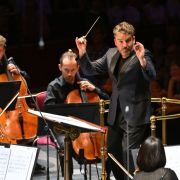
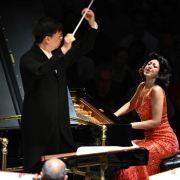
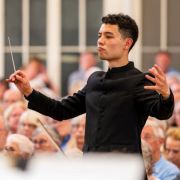
As the festive season approaches, orchestras and choirs across the country begin to roll out that perennial favourite: Handel’s ever-familiar Messiah. In a landscape crowded with seasonal performances, it can be difficult to make this work feel genuinely fresh, yet Jeannette Sorrell with her Hallé forces managed exactly that. Striking a deft balance between oratorio and opera, she delivered a rendition that stood out as one of the most memorable Manchester has heard in recent years.

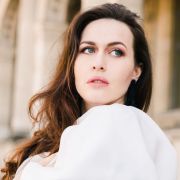
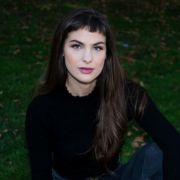
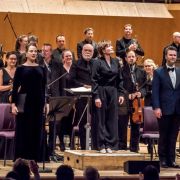
Soloists Sonya Headlam, Beth Moxon, Thomas Elwin and Henry Waddington sang without scores, stepping to the centre of the platform and performing with an operatic sense of immediacy. Each animated the text vividly, using their arias to narrate the story with dramatic intent. High in the stalls above the orchestra, the choir acted as observers, singing from above, many also from many from memory. In Part 2, Sorrell reordered several numbers to strengthen the narrative line, a choice that, despite omitting quite a few choruses and arias, heightened the drama.


Elwin delivered “Comfort Ye and Every Valley” with assurance and elegant clarity. His diction was faultless, his velvety tenor carried effortlessly through Bridgewater Hall. Passing the musical baton to bass-baritone Waddington, “Thus Saith the Lord” arrived with equal authority, setting a formidable standard for the remaining soloists, but his commanding moments were in Part 3. “Behold I Tell You a Great Mystery” and “The Trumpet Shall Sound” were intense and captivating, delivered with such sheer conviction.
Mezzo-soprano Moxon was slightly tentative at first. There was much to admire in “But Who May Abide”, particularly in her nuanced phrasing, but her projection occasionally faltered. Later, “He Was Despised” (placed after “All We Like Sheep”) carried far greater weight, though the da capo repeat could have benefited from a touch more ornamentation. This may well have been due to her stepping in late as a replacement for the indisposed Alice Coote.
Headlam, the final soloist to take centre stage, offered a markedly different vocal colour. Her diction was less crisp and she employed more vibrato than her colleagues, who were notably restrained, especially alongside an orchestra using so little. Even so, she was persuasive in her aria “How Beautiful Are the Feet” and brought both poise and humility to “I Know That My Redeemer Liveth”.


The true stars of the evening, however, were The Hallé Choir. Under the meticulous direction of Matthew Hamilton, they achieved a warm, balanced sound with impressively clear diction. On the rare occasions where clarity slipped, it was noticeable only because their usual standard was so high. Sorrell sought a full, resonant choral sound, and the choir delivered exactly that, responding keenly to her precise gestures. Their finest moments were not necessarily the famous choruses, but the more intricate ones – “Since by Man Came Death” and “And with His Stripes” – which they rendered with striking nuance.
Sorrell was unafraid to use rubato, shaping phrases flexibly and collaborating closely with each soloist to find expressive space. With the choir, she drew out the magnitude of the text’s message, culminating in a final “Amen” that rang triumphantly around the hall. This was a refreshed and revitalised take on Messiah and one I wholeheartedly welcome.