In 2006, a group of friends meet in Tarragona, on the Catalan coast, to talk about music. Located less than 100 kilometres south of Barcelona, the city has much to offer to both locals and tourists, its history stretching back to Roman times and its climate favoured by the sun and sea breeze of the Costa Daurada. And yet, the group agrees that something is missing: Tarragona does not have a local orchestra and is relatively detached from the region’s lively music scene.

An idea naturally arises – why not start their own orchestra? They are all skilled musicians, and among them is Tomàs Grau, a freshly graduated conductor who has just come back from a cycle of masterclasses in Vienna. It doesn’t take much convincing to get Grau on board, and not long afterwards the Orquestra Camera Musicae is born.
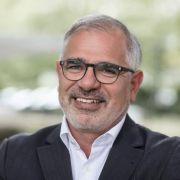
By 2026, that original conversation between friends in Tarragona has evolved and expanded, involving hundreds of musicians and reaching an international audience. Now performing as the Franz Schubert Filharmonia, the orchestra is celebrating its 20th anniversary under Grau’s direction. As one of its core principles, the Filharmonia often seeks to work with different conductors, hosting guests the likes of Ton Koopman, Christoph Eschenbach and Rinaldo Alessandrini. However, it is hard to imagine what the ensemble would be without Grau, who has shaped its identity through the years and brought it on tours in Europe and the United States. Talking to Grau, I am surprised to hear it could have gone very differently.
“Music began as a hobby for me,” he recalls. “None of my relatives are musicians. When I was seven years old, my parents asked me if I was interested in taking lessons because one of my teachers told them that I might have a talent. Not thinking much of it, I started playing the piano and studying music theory at a small local school. The fact that it was conveniently placed close to our home had its benefits,” he jokes. “But I wasn’t really aiming for a career. It was a strange beginning, and everything happened rather spontaneously. By the time I enrolled at the conservatory in Barcelona, I thought I would become a pianist.”


Soon enough, things take another unexpected turn. On 22nd November 1998 Grau attends the Palau de la Música Catalana in Barcelona to listen to the Staatskapelle Berlin on tour with Daniel Barenboim. The programme is classical through and through: Beethoven’s Third Piano Concerto (with Barenboim as the soloist) and Fifth Symphony. During the evening Grau has a kind of revelation: “The first half was excellent, but as the Fifth started, I thought – wouldn't it be great to be able to lead an orchestra at that level? It left such an impression on me, I was bewitched. I decided to apply to the Catalonia College of Music to study choral and orchestral conducting, while also learning the basics of the violin, percussion, and singing.”
Right after graduating, Grau started working with the newborn chamber orchestra in Tarragona. The limited size and experience of the ensemble are a cause of motivation, rather than a hindrance, and the group quickly develops sense of its identity. “We have always stayed true to two main precepts,” he explains. “The first is to always offer great performances to the public. No matter how green we were at first, we never wanted to be a gig orchestra, and we have worked hard together to refine our sound, to achieve that unity. The second is to regularly switch conductors. I am often on the podium, but I don’t want the orchestra to always play under me. Not out of boredom, but because I find routine dangerous for music and art in general.
“There is much to be learned from other styles of conducting and points of view. We have brought in some exceptional conductors over the years, meanwhile I got the chance to know the peculiarities of other orchestras. Then, every time we reunite, we find each other refreshed.”
A look back on the Filharmonia’s trajectory over two decades shows the positive effects of this flexibility. The chamber repertoire of the early days, centred on Mozart and Stravinsky, grew to include Beethoven, Schubert, Mendelssohn, Dvořák and Tchaikovsky while the orchestra filled its ranks. As seasons came to feature cycles of symphonies and concertos, the Filharmonia took roots in the soil of Catalan and Spanish ensembles. The initial aspiration – bringing music to smaller venues in the region – remains alive today, with frequent visits to theatres and concert halls in Tarragona and Lleida. At the same time, Grau is now a regular at the Palau de la Música Catalana, having come full circle from that fateful evening in 1998.
“Playing in these cities always feels very special. In those moments it becomes clear that we have built something beautiful, especially when stars like Anne Sophie Mutter, Mischa Maisky, Midori, or Joshua Bell establish long-term collaborations with us and choose to come back for several seasons. However,” Grau adds, “we also want to bring a piece of us to the rest of the world. A recent highlight was our European and American tour in 2023, which marked our first-ever time in the United States and debut at Carnegie Hall.
“The programme was devised as a musical bridge between Catalonia, Spain, and the US: we played Pablo Casals’ Sant Martí del Canigó, Rodrigo’s Concierto de Aranjuez, and Dvořák’s New World Symphony. It was an incredible success.”
In the rich landscape of Catalan and Spanish music, the Filharmonia also strives to support and promote artists from the region. The orchestra has commissioned or premiered 25 works so far, including what Grau refers to as a ‘superproject’: the collaboration with Catalan composer and pianist Albert Guinovart, which culminated in the recording of his chamber opera Alba Eterna.


“We want to be involved in society and introduce local repertoire in our programmes,” Grau explains. “Albert Guinovart was our first artist in residence. He is such a multi-faceted musician. Together we chose to craft a project that would encompass all aspects of his talent, alternating several performances of his own works with piano concertos from the canon, where he would be the soloist. The recording of Alba Eterna is testimony to our creative connection.”
Grau’s choices as Music Director reveal a fondness for the repertoire that the Filharmonia would cut its teeth on in early times. “Beethoven, Schumann, Tchaikovsky, Bruckner, Mahler – that's where I think I can better connect with the orchestra and transmit my vision. I feel drawn to the melancholy in their music. And of course, Bach, Haydn and Mozart are like parents to me,” he laughs.
Interestingly, when asked about possible future ventures, Grau throws an eye to contemporary U.S. composers and one specific opera: “I am fascinated by Max Richter, John Adams, Philip Glass. I admire how they have developed such distinctive contemporary idioms in their music. One piece that I would love to test out is Adams’ Doctor Atomic Symphony – its colours and dark, emotional atmosphere truly speak to me. And,” he pauses, amused, “I am just waiting for the chance to conduct Cavalleria Rusticana, which I have loved since I caught Riccardo Muti conducting it on TV when I was a kid.”

In the meantime, Grau’s schedule continues to be busy. His most recent commitments include concerts with the Simón Bolívar Symphony Orchestra – a partner of the Filharmonia for years – and the Tokyo Philharmonic Orchestra.
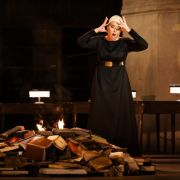
One future appointment that Grau guarantees is not to be missed is the Filharmonia’s celebration of Turandot’s 100th birthday, consisting of two semi-staged performances in Barcelona starting on the very day it premiered, 25th April. Grau comments: “Among opera composers, Puccini holds a special place in my heart. I am looking forward to sharing this feeling with the public.”
In other words, Grau and the Filharmonia seem to have an agreeable Mediterranean wind in their sails. “Thinking back,” Grau concludes jokingly, “I guess my music teacher at school was right – I do have some talent after all!”
Tomàs Grau conducts the Franz Schubert Filharmonia in Puccini’s Turandot on 25th & 27th April.
See upcoming performances by the Franz Schubert Filharmonia.
This article was sponsored by the Franz Schubert Filharmonia.