From the very first rumblings of Akram Khan’s Giselle, to the final devastating moments – the spine tingles, the goosebumps are ever present, the tear ducts prick and the entire audience appears to be under a spell. It has made a triumphant return to the London stage, and for the first time in its ten year history, it’s being presented at the Coliseum.

Whether it’s the venue, the acoustics or the fact that in spite of repeated viewings, it retains elements of a shocking nature, it has never looked or sounded better. I think it’s time to stop comparing it to traditional productions as it is such a radical departure from the classical ballet versions – it stands tall in a league of its own. Of course Khan has taken inspiration from the story and Vincenzo Lamagna’s dramatic score lingers on Adolphe Adam’s recurring themes – and there are references to sections of familiar choreographic motifs both in the ensemble scenes of the first act and for the Wilis in Act 2, but there, the similarities end.


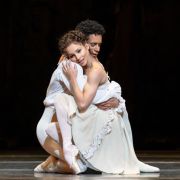
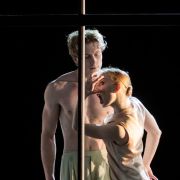
The opening night proved riveting. This modern reimagining, is set in a disused garment factory, leaving a community of workers (Outcasts) without employment or hope. Separated by a wall from the Landlords, the mindset is very much ‘us and them’. The betrayal Albrecht inflicts on Giselle mirrors that of usual productions but it felt, on this occasion at least, more brutal, more identifiable, more horrifying.

It wasn’t necessary to read the synopsis in the programme, the tragedy unfolded with chilling clarity. Giselle’s murder was graphically depicted, the rawness of emotions, absolutely heartbreaking. And yet, I found the pendulum of spontaneous reactions swung wildly from hate, to fear, to empathy and pity because if there was one overriding impression, it was that all the characters were somehow victims of the system.
The speed, athleticism and brooding anger (and occasional joy) of Act 1 was supplanted with a threatening stillness in Act 2. While the outcomes were bleak, it was with a slightly inexplicable sense of belonging, I felt personally invested in those outcomes. Why on earth did I experience a quivering bottom lip at the end of both acts?

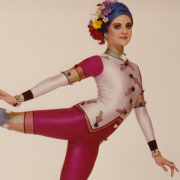
It’s a combination of all the elements of the production coming together to make the audience feel involved. Tim Yip’s sets and costumes still look astonishing after multiple viewings. His heavy rotating wall looms menacingly over the proceedings. The English National Ballet Philharmonic under the baton of Maria Seletskaja, produced a sound that at times was thunderous, overwhelming and at others, so fragile and soft, it was tearjerking.
The dancing was out of this world. From each of the Outcasts and Wilis, to the members of the Landlord's entourage. Fabian Reimair's Landlord presided grimly over the action. He is one of those dancers who commands the stage no matter how small a gesture he makes. Isabelle Brouwers similarly needed to do little to portray the necessary glacial character (she will dance Myrtha at later performances).


Emma Hawes was a majestic Myrtha, Queen of the Wilis, daring to challenge anyone who undermined her authority. Not for the first time, much praise should be heaped on Ken Saruhashi's Hilarion. In 2024 I remarked that he had developed the role substantially since he had first danced it. Without wishing to sound repetitive, he's done it again. His every expression, jump or jerky movement told the story meaningfully.

James Streeter was one of the early Albrechts. In the intervening years he has always given genuinely moving, sincere performances but he too surpassed previous showings. He seemed utterly broken at the end – thus the unexpected ‘welling up’ in the closing moments. It was the first time I have seen Emily Suzuki in the title role, although this wasn't her debut. She delivered a compelling performance, at first feisty, later with extreme vulnerability, at all times believable.
I would gladly watch every show, with every cast. I left the theatre feeling slightly shell-shocked (which is how one should feel) but I just can't get enough of it. Khan has given ENB a modern classic and the company has thoroughly embraced the challenges.