Carmen – a succession of irresistible tunes or an opera with a dramatically relevant message for our times? Saying anything new with Carmen is hard. Stray too far and you risk audience disapprobation. Most directors are happy to ramp up the seduction levels of a very independent woman. I have yet to encounter a production that actually sets the action in nineteenth-century Seville. Admittedly, director Paul Curran and revival director Sarah Baxter's decision to relocate the action to an unspecified, palm-fringed Caribbean setting in the 1950s does not fundamentally alter the drama. Nevertheless, the new setting felt organically connected to the action, particularly in the smugglers' hideout and at the cigarette factory.

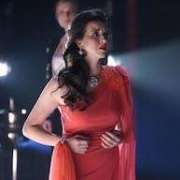
Gary McCann's designs are vivid, illuminating the slightly grotty, dissolute world of Carmen and her entourage. Peeling billboards advertising a woman smoking set the opening scene, while a green-windowed street café provides the backdrop for Act 2. A huge metal-barred warehouse lends an ominous chill, while the gaily bedecked street scene of the final act stands in contrast to the dark deeds about to be committed. McCann's costumes complement the setting effectively: green uniforms for the soldiers and characteristic 1950s dresses for the cigarette workers. Carmen doesn't always wear red, but at key moments, notably the Habanera and final act, she is splendidly vermilion!


Niamh O'Sullivan had plenty of pizzazz as Carmen. Less femme fatale, but seductive nonetheless, her Carmen possessed a charming, brazen quality. An arch manipulator, she used men to her advantage while staunchly refusing to be controlled or possessed by Don José. In the Habanera and Seguidilla she sang with engaging mischievousness, while her softer singing still pulsated with energy. Her acceptance of her fate in the card-reading scene in Act 3 bordered on the melodramatic, puncturing some of the subsequent tension and diminishing the sense of fatalism that underpins the remainder of the opera.

In many ways, Carmen is as much a study of the destruction of an unremarkable soldier, transformed into a lawless outcast driven to murder, as it is of its eponymous heroine. Atalla Ayan's Don José was a rather stolid figure; he lacked volcanic passions and ultimately failed to convince us of the psychological upheaval that overtakes him. He took time to open up vocally, particularly in the quieter upper registers, affecting the dramatic effectiveness of both the Flower Song and his scenes with Micaëla. The Flower Song became a showcase of vocal display rather than genuine vulnerability. Even in the final duet, where his desperation acquired a darker menace, it was difficult to reconcile his essentially amiable demeanour with the capacity for violence he ultimately displays.
The role of Micaëla is more straightforward, but she is not simply a sweet, innocent girl: she displays considerable courage by venturing into dangerous territory to find José. Stacey Alleaume's soprano shone with a pearly lustre in Act 1 while her Act 3 aria had real emotional heft.

One of the wonders of Bizet's Carmen is that each of the four principals has such memorable tunes, few more rollicking than the Toreador Song. Here David Bižić gave it socks; where Don José stood diffidently, Bizic simply oozed charisma. Dressed in a biker's leather jacket, he sang with a controlled, powerful voice, commanding attention from one and all.


Three more performers deserve honourable mention. Both Jade Phoenix (Frasquita) and Anna-Helena Maclachlan (Mercédès) sang engagingly, relishing their theatrical opportunities. As Zuniga, John Molloy's voice possessed a rasp that distinguished him as a manipulative rake, while his acting was amusing.

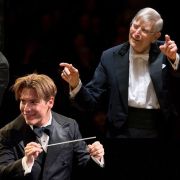
Holding it all together in the pit was Fergus Sheil. His tempi were lively: the opening Prelude had great exuberance and swaggered along, while he also captured the darker elements of the Fate motif. The flute melody of the Act 3 entr'acte lacked the haunting delicacy that makes it so memorable. Nonetheless, he maintained momentum while allowing the singers sufficient freedom.
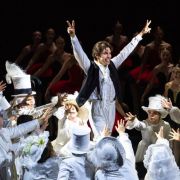
The INO chorus succeeded in bringing the stage to life, singing with vim and no little vigour. The different communities – cigarette workers, soldiers, smugglers and townspeople – were convincingly realised. At times the stage was visually busy but never cluttered. Particular credit goes to the ITW Children's Chorus, who gave a terrific rendition of "Nous marchons", accompanied by engaging choreography.

The ultimate test of any Carmen comes in its final scene. The production goes further than Bizet's original, adding José's suicide to the horror of Carmen's brutal murder. Yet the confrontation lacked the emotional intensity it demands. Worse, Carmen's final gesture of hurling her shoe at him prompted titters from the audience rather than the horrified silence the moment should command. The opera's themes of possessiveness, female independence and male violence remain extraordinarily relevant. Curran and Baxter present an attractive, lively production, but it doesn't quite deliver the full dramatic impact.