What does it mean to make a place holy with music? For Beethoven, music held a sacred power in itself, and he titled his last concert overture Die Weihe des Hauses (The Consecration of the House). Wagner followed suit in Parsifal, subtitling it a Buhnenweihfestspiel, a “play to consecrate a stage”. In turn, the director Philipp M Krenn unwraps the enigma of Wagner’s last opera in his site-specific staging for the Tiroler Festspiele Erl.

Tucked into the lee of an Alpine valley, overlooking the Austrian border with Bavaria marked by the River Inn, the Festspielhaus affords a spectacular view from the vantage-point of its terrace. Accompanying the preludes to each act, films show us Jamez McCorkle as Parsifal and Ricarda Merbeth as Kundry, approaching and exploring the Festspielhaus and the neighbouring Passion Theatre. During the opera’s apotheosis, once Parsifal has reunited Spear and Grail, the lights come up and so does the orchestral pit, while the chorus process through the auditorium. Such tropes of modern opera stagings often become tiresomely meta, but they are renewed here in a celebration of opera itself, and its power to move and delight us.


Stage sets by Holke Vollmer take their cue from the Alpine contours of the Festspielhaus architecture. Large blocks signify the walls of the Grail Hall, mountains, harps and lyres. Water plays a central role in Parsifal, from the soothing bath taken by the wounded Amfortas in Act 1 to the redemptive acts of baptism in Act 3, and so it does in Erl. Merbeth gamely sings for much of the time either in water or soaking wet. Video work by Thomas Achitz evokes the play of water and colour across the stage, so that the famous line sung by Gurnemanz, “Here time becomes space”, takes on strikingly real as well as philosophical dimensions. More than once, and especially in Regine Standfuss' all-white but chronologically disparate costumes for the Grail Knights, the environment of Thomas Mann's Magic Mountain came to mind, as an asylum which cannot seal off its staff or inmates from their past or their suffering.

Drama over ritual was the keynote quality to singing and playing, too. As an experienced Brünnhilde, Merbeth has the fiery chest register, the stamina and then the agility to pick out her perilous top B on “lachte”. Making his debut in the title role, McCorkle brought a complementary physical and vocal commitment to their Second-Act duet, which unfolded with unusual, even verismo-style directness.
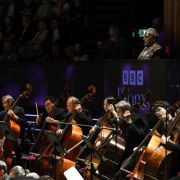
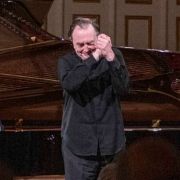
When Merbeth’s voice spread under pressure, and McCorkle’s vibrato occasionally turned raw, it seemed partly a function of an acoustic that does not reward singers performing from anywhere other than the apron of the stage, facing forwards, where they still found themselves competing with the volume of Wagner’s orchestra emerging from an uncovered pit in front of them. With his own long experience in this repertoire, including Ring cycles in Australia and Seattle, Asher Fisch moulded a swift and flexible account of the score, more attentive to the articulation of his singers than to their relative projection. The core of Michael Nagy’s Amfortas always held both dignity and classical legato in the face of considerable pressure, while Audun Iversen swapped roles from his recent Amfortas at Glyndebourne to make a youthfully dynamic and even (curiously) sympathetic villain out of Klingsor.


René Pape’s dominant portrayal of Gurnemanz has weathered both the passage of the years and the vagaries of one staging after another. His tone retains the gleam and authority of portrayals from decades past, while he now uses the words of his Good Friday scene more than ever to reach the peak of intensity Wagner must have had in mind when he claimed that the last act of Parsifal would far surpass that of Tristan.

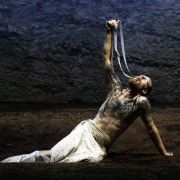
A troupe of stamen-wielding Flowermaidens elegantly subverted the conventional spear-and-grail power and gender dynamic. More assertive than seductive, they amplified the effect of a Parsifal which paradoxically succeeded through the lack of refinement, even while ultimately achieving the serene and mystical blessing bestowed by Wagner upon his first enraptured audiences.