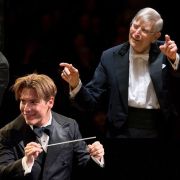
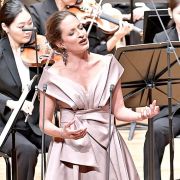
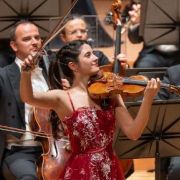
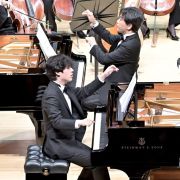
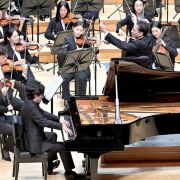
At Seoul Arts Center, the Seoul Philharmonic previewed its programme for five concerts in Spain, Italy and the Netherlands layer this month. John Adams’s The Wound-Dresser and Beethoven’s Ninth Symphony placed private witness beside public affirmation, revealing how firmly Jaap van Zweden’s convictions shaped the music and where they began to constrain it.

In The Wound-Dresser, Matthias Goerne and van Zweden returned to an interpretation shaped over several collaborations. A high violin line hovered with feverish unease. Beneath it, the orchestral pulse remained discreet, lingering through the pauses between phrases. Goerne brought dark, inward authority to Walt Whitman’s hospital memories. Consonants registered as acts of attention and his pauses conveyed the weariness of a witness carrying on with his work. The broad pacing occasionally burdened the poem’s walking rhythm, the central procession from bed to bed losing some immediacy. Near the end, the turn towards the major let in light by degrees. Goerne’s final tenderness remained private, almost unbearable. The occasional loss of sheer amplitude mattered little beside his command of language.


Van Zweden brought the same certainty to Beethoven’s Ninth. His repeated performances of the work in Seoul suggest deep trust in Beethoven’s metronome markings. The strings answered his compact beat with fierce unanimity. Tremolos held nervous voltage; the first tutti struck with hard, low-centred force. Momentum remained taut through the development. The woodwinds had little room to alter the atmosphere, their phrases swept along by the string-led current. At several formal junctures, van Zweden broadened the tempo before the harmony had made the change feel necessary. The resulting gear changes sometimes felt imposed.
The Scherzo brought the evening’s strongest orchestral playing. Timpani and clipped bow-strokes formed a resilient engine. Fugato entries landed with exhilarating precision, but each carried much the same weight, leaving the counterpoint on a single plane. In the Trio, the woodwind lines struggled to float free at this speed. The Adagio faced much the same problem. Van Zweden maintained a purposeful inner tread and kept the variations lucid. The cantabile lines remained tethered to that tread; their crescendos rose in broad steps, with too little inflection between one dynamic level and the next to let the music breathe freely.

In the finale, van Zweden’s directness worked well in the instrumental recitatives. The lower strings spoke with weight and decisive syntax. Goerne’s “O Freunde” carried authority, each word leading naturally into the next. The solo quartet never quite fused. Its top-heavy balance and sharply contrasted timbres left the individual voices exposed at speed. The National Chorus of Korea supplied the cohesion. Diction and pitch stayed secure and the singers held their collective focus under intense pressure.


The final acceleration took on a Furtwängler-like ferocity and delivered the evening’s sharpest jolt. The tension in earlier episodes had been too uniform for that release to feel inevitable. Before departure, van Zweden could allow the winds more room to articulate and find more shades between dynamic extremes. His tempo changes would convince more readily if harmony and phrase prepared them. The interpretation already has an unmistakable identity. Greater room for the individual voices would make its urgency tell more strongly.