The tempestuous weather that blusters through so much of Handel’s dramatic writing was no act of the imagination. The late 17th century saw unprecedented thunderstorms, frozen seas, sudden onset floods and winds of such force that they pulled trees up by the roots. One August night in 1674 in Utrecht – where Opera2Day landed on Friday for one night of their Netherlands tour – the cathedral church of St Martin lost its entire nave to a hurricane. It was 200 years before anyone cleared up the mess, leaving to this day its elegant and much-admired bell tower stranded from its stolid business-end 50 metres across the square.

Opera2Day, with 20 years of touring reinvented classics behind them, have turned to Handel and his era of everyday apocalypse as realised by the elaborate spectacle that was Baroque theatre for their latest outing, The Opera Circus. Partnered by the Netherlands Bach Society, artistic director Serge van Veggel has spliced together arias and orchestral interludes from Handel’s operas to create a new but resolutely on-brand story of warring gods and canny mortals, and added a contemporary twist: circus. The resulting edifice is an idea that falls foul of heavy weather, but manages to survive as a thing of two very different halves.


The gods of war, Armata and Armato, have fallen out. All is desolation and doom, until a colourful circus troupe arrives. Finding some old Baroque staging in the rubble and gripped by what contemporary philosophers might call the ‘Muppet-impulse’, they decide to put on a show. The result – eventually – is a gloriously camp clown-show replay of the gods’ self-defeating dispute, complete with gurgling fountain, birdsong, oversized floral tributes and all presented in a beautifully reconstructed picture-box theatre.

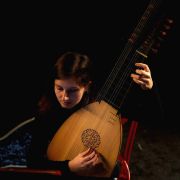
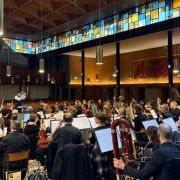
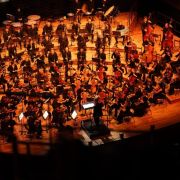
It was genuinely a thrill to hear the exuberant Netherlands Bach Society Orchestra breeze through a selection including the boisterous Tambourine from Alcina (and yes, there was a very busy percussionist), as the complex trappings of Baroque stagecraft were winched, rolled, dropped or hoisted into place. Rolling waves and flowery bowers, it’s a delicious bit of design by Herbert Janse and the delight in the auditorium was palpable. If the orchestra sounded a little boxed-in and woody in the dry acoustic of Utrecht’s modern Stadtsschouwburg, then it was all to the benefit of the general artifice. What’s more, the audience had the advantage of being able to enjoy all Handel’s shiveriest bits articulated with perfect clarity and not one but two theorbos.

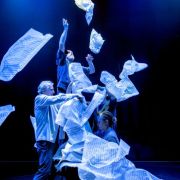
But we had to wait an age for it. The first half of the show, the circus bit, is dominated by a lot of poorly choreographed swinging and dangling – difficult to get right at the best of times – but these acrobat Furies were poorly lit and badly served by billowing costumes that obscured the grace of any upward trajectory while revealing dance-knickers and knee-braces on the way down. The gods of war do their best to appear important, with their duet “Ch’egli mora!” from Arminio that kicked things off, but with all the air-to-surface grappling going on all around it was difficult for anyone to focus, and while the departure of the airborne Furies was welcome it created another problem – directionless longueurs with plenty of lovely music but not quite enough story to keep the thing afloat. It felt like trying to ride out Handel’s tempest in a leaky vessel.


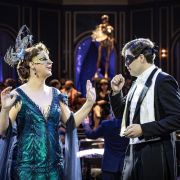
Once the circus departed (to set up the show-within-a-show) the singers could get on with it, if not in peace exactly then in the plaintive duet “Da sola/o restero” from Giulio Cesare, a chance for Maria Schellenberg to show us what she could do uninterrupted. She was sublime. As Armato, James Hall was vocally more focused throughout and dialled up the melodrama to pleasing effect elsewhere but met Schellenberg in a more intimate, tender register as the gods faced their final reckoning. It was moments like these, with orchestra and singers left to do what they do best, which demonstrated that Handel’s musical storytelling – if the conditions are right – requires little embellishment.

All was well once the sun made a brilliant appearance in the person of Maud Bessard-Morandas, whose voice and irresistible comic delivery could charm any tempest. The gods were united, but unfortunately the same can’t be said for this over-conceptualised production, which remains two different things that would be better left apart.
Eleanor's press trip to Utrecht was funded by Opera2Day