Percy Grainger famously likened the Prelude to Wagner’s Tristan und Isolde to an erection. Had he heard the Turangalîla-Symphonie, even this composer/pianist-cum-sybarite may have found himself gasping for words, not to mention breath. Nearly 80 years after its composition, Messiaen’s inexhaustible orgiastic energy seems more timely than ever in the age of MDMA and Viagra-fueled bacchanalias. (At least the symphony’s extended priapisms can be enjoyed without getting medical help straight away!)

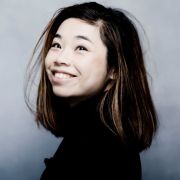
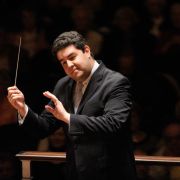
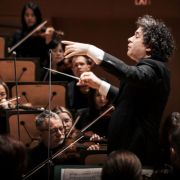
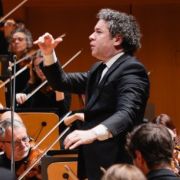
Not that Turangalîla is all “wham, bam”. Simone Young, as the Los Angeles Philharmonic’s guest last week, kept the symphony centered on its exaltation of human love in its totality, personal and universal, sacred and profane. Young didn’t neglect to convey the symphony’s near visceral power. In the Introduction, she pounded out the ‘statue theme’ with the force of a mallet walloping on a stake. Wave after wave of orchestral incandescence were driven unabated in the Joie du sang des étoiles and Finale, sending electric chills up everyone’s legs, the energy rattling on right to Disney Hall’s rafters.


Neither constant applause between (and occasionally during) movements nor Messiaen’s own libidinal turns of mood shook Young’s sense of line. She blended the Philharmonic’s bright, metallic sonorities, its individual voices and instrumental choirs. Silence and sound were threaded together into a single breath; each musical phrase and, in turn, each movement was shaped as a logical consequence of what had preceded it. The sustained focus of the thing, exemplified in microcosm with a Jardin du sommeil d’amour that poured out its song as if in one single gulp of air, was Wagnerian, a vision of carnality idealized, controlled.
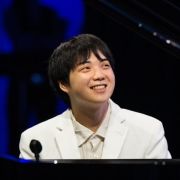
Of invaluable support were the evening’s soloists, upon whom Messiaen heaps pages black with notes, all of which are also supposed to cut through a 100-piece orchestra. Jean-Yves Thibaudet, long a steady hand in this music, was exacting in execution, icy in expression. Even in moments where the music convulses with passion, as in the piano cadenza in the coda of Joie du sang des étoiles, Thibaudet kept his head above the fray, dispatching cascades of chords with rapidfire precision. In the two Chant d’amour movements, his fingers kept steely throughout the phantasmagorical Chopinesque figurations, while in the later movement's Petrushkaisms he let loose with an airy sense of play. Cynthia Millar, another friend in good standing of the Turangalîla, let her ondes martenot sing out with radiant power.


The brain is our largest sex organ, so it is often said, and Young seems to agree. Her interpretation of Turangalîla was as much cerebral as it was somatic. She took care throughout the performance to maintain symphonic unity – no easy feat in a score that has tempted many a conductor into tearing it into dazzling, if episodic bits. Then again, Young is no ordinary conductor. So here’s a bit of unsolicited advice to the Philharmonic board: we need to see more of her here in Los Angeles.