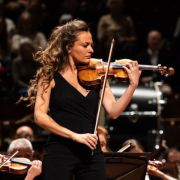
This Royal Scottish National Orchestra concert was a bit of an epic one, and not only because it featured the full Firebird ballet score, not the suite. Even that felt like small fry, however, next to one of the longest violin concertos in the regular repertoire, Sir Edward Elgar’s. It’s a work that soloist Nicola Benedetti has been touring this spring, so she knows it well, and that might help to explain how, for all its length, this performance never dragged or dropped its momentum.

Benedetti had clearly thought carefully about how she was going to address the concerto’s huge span, and she played her hand openly in her first entry, which was smooth, refined and full of legato rather than laying down an assertive gauntlet to the orchestra. That sense of poetry and of communication characterised everything about her approach. She lavished vibrato on her playing, sounding intoxicatingly lovely in the instrument’s lower register, always prioritising lyrical sweetness over dramatic showiness, even when producing technical brilliance to meet the majestic swell of the orchestral tone.
The RSNO played with strength and beauty throughout. Conductor Kirill Karabits, a rare visitor north of the border, got the balance just about right between orchestra and soloist. Maybe the central Andante was a touch too forceful, from both violin and orchestra, Elgar’s lyricism underlined and pointed at rather than being allowed to flower under its own impetus. The finale, however, had the perfect relationship between lightness and drive, its staccato weight urging the music forwards while the soloist seemed to bounce alongside it. Here, more than elsewhere, Benedetti seemed more tethered to her score and there was more of a sense of the technical demands of the part than in the earlier movements. Who can blame her, however? It’s ferocious! And the cadenza, that strange duet between the rhapsodic soloist and the thrumming string section, had both magic and confidence. Elgar famously described his concerto as being “awfully emotional. Too emotional!” and in the final pages soloist, conductor and orchestra managed to bring everything together in that tricky union that suggested the concerto’s emotional journey had been fulfilled.

The orchestra really came into their own when playing The Firebird. They rarely get a chance to get their teeth stuck into the full fat version like this and they appeared to be loving every minute, with shimmering flutes for the Firebird’s music, skirling winds and braying brass for the evil Kastchei, and strings that could hover on the edge of silence as convincingly as they could tear through the Infernal Dance. Karabits got under the score’s skin right from the off, with an opening that prowled and threatened because it was so cleanly articulated, menace growing through the double basses in playing that was precise and sweeping even at pianissimo. Karabits shaped it with terrific flair, allowing the story to unfold with theatrical sweep while tightening the tension noticeably for key moments like the Firebird’s first appearance or the gleeful lightness of the Princesses’ game.
This just about made up for Franghiz Ali-Zadeh’s disappointing Nagillar, a 15-minute Azerbaijani fairytale that was all moving textures and shifting tonal colours, but very little else. Subterranean rumbles, shimmers and thuds, fluctuating waves of sound; all fair enough, but what I wouldn’t have given for a melody!