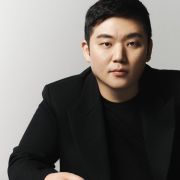
“It takes ten years to make a conductor, and another ten years to make a good one.” Bearing in mind Arturo Toscanini’s quip, what might an audience expect when an established conductor is forced to cancel at the eleventh hour and a relative neophyte is parachuted in? Fortunately, Korean rising star Hankyeol Yoon proved that maturity is not solely a product of age and experience. With the Orchestre symphonique de Montréal, Yoon delivered a (slightly adapted) programme that was both technically sound and interpretively expressive. Throughout, the music was judiciously balanced and sculpted to reveal interpretive insights.

A highlight was Alina Ibragimova's exhilarating rendition of Stravinsky’s Violin Concerto in D major. Ibragmiova literally dug in (the hairs were flying off her bow) to harness the savage character of this guttural work. Technically, she was flawless, notably in the challenging triple-stop (comprising the stretch of a twelfth) that opens each movement. In an acoustic that is unkind to violin soloists, Ibragimova's sound sailed over the OSM’s accompaniment. Both soloist and her orchestral collaborators were spot on rhythmically – no small feat when the mixed-meter back and forth between them is akin to exchanging short bursts of machine-gun fire. Ever so briefly, Ibragimova lost her way, seemingly due to a pedal (page turn) issue with her iPad. In Stravinsky's fleeting segments of lyrical material, perhaps a more cantabile approach would have heightened the contrast. Quibbles aside, Ibragimova left no doubt that she is a world class talent.
After intermission, Yoon led a solid reading of Rachmaninov's Third Symphony. Kudos to Todd Cope (clarinet) and Catherine Turner (French horn) who nailed their unison duet at the outset; it's particularly challenging to keep the stopped horn notes in tune. Both Turner’s and Concertmaster Andrew Wan’s solos at the beginning of the Adagio were gorgeous, faithful to the stylistic contrasts that Rachmaninov delineates in the score. Yoon's consistent attention to detail resulted in an insightful and pleasing performance. Those insights would be more fully revealed to listeners if Yoon better exploited the palette of tone colours and array of articulations that professional instrumentalists have in their toolboxes.
That shortcoming aside, Yoon undoubtedly earned a return invitation to conduct the OSM. No one left the hall feeling disappointed that a young substitute had stepped in at the last moment.