Following its production of Zoraida di Granata in 2024, the Donizetti Opera Festival makes a return to the Emirate of Granada in a new production of Alahor in Granata in the first staged performance of the original version in the modern era – a timely way to celebrate the opera's 200th birthday.

The opera premiered in 1826 at Palermo's Teatro Carolino during Donizetti's brief and fraught period there as Music Director, with a mystery librettist known only as “M.A.” Its plot takes a minute to grasp. Siblings Zobeida and Alahor are the last surviving children of the Abenceraghi monarch, Mohamed, who was deposed by a rival faction, the Zegris, led by Aly who takes the throne and is subsequently succeeded by his brother, Muley-Hassem While Alahor flees, Zobeida stays in court and subsequently becomes the favourite of Hassem, who is trying to calm the tensions between the two factions, while also brokering peace with the Iberians. Hassem has refused to marry the daughter of the powerful Zegri, Ismaele, who now seeks vengeance; the return of Alahor with murderous intentions offers the perfect vehicle to achieve this end. It all ends happily, of course, with the two siblings united and Hassem marrying Zobeida with Alahor's blessing. Musically, it is unadventurous, but Donizetti's trademark orchestration is there – the keen-eared will recognise music later used for Belcore's entrance in L'elisir d'amore – and Act 2 contains the majority of the opera's best numbers.


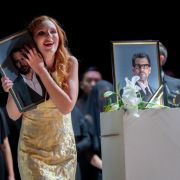
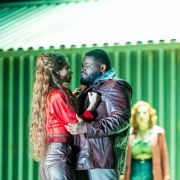
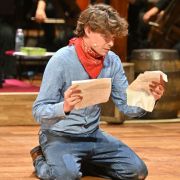
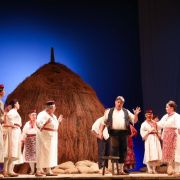
While, as an opera seria, Alahor isn't a tragedy, it is not meant to be a comedy either, yet director Benedetto Sicca Papa's production is unintentionally funny. Alahor constantly feels the presence of the shade of his father; in this production an acrobat in traditional ascetic Muslim clothing who swoops down on lines every so often, and is only one white bedsheet and a “whoooo” away from the caricature of a ghost. At one point Hassem places a smacker on Zobeida's cheek that positively boomed off the stage. In the finale, the three dancers who have been a regular and quite enjoyable feature, suddenly unmask and start dancing with Zobeida and then Hassem for no apparent reason, and as for the Personenregie, poor Ismaele becomes a cackling manic pantomime villain, swaying and dancing across the stage – half Dracula, half Gollum – while the treatment of Alahor in the first half is a shambles. The staging is traditional, but Luigi Ferrigno's set is bare – essentially two walls with a moveable large box which characters can enter or top. A number of objects not dissimilar to prawn crackers are either hanging from the ceiling or sprouting from the floor, depending on the act. There are some reasonable ideas – even Mohamed's shade could have worked – and the use of child actors is fine, but the execution is poor. This is not one of Donizetti's first tier operas, but it deserves better than this desultory production.

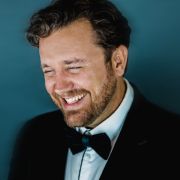
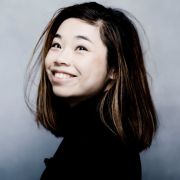
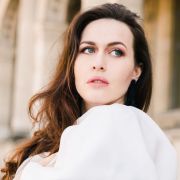
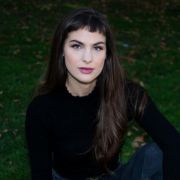
The Festival has assembled a respectable cast for the production which partly rescues the staging. The laurels have to go to Mira Alkhovik who sang Zobeida with a clean and fragrant soprano, largely hitting the top notes even if they weren't always fully rounded. She sang generously though, and with spirit, really coming into her own in Zobeida's splendid duet with Laura Verrecchia’s Hassem, who took a little while to warm up, seeming rather inert both dramatically and vocally in the first half, but improved markedly after the interval. Verrecchia’s mezzo isn't huge, but was sufficiently well-projected for the Teatro Sociale. As Alahor, Roberto de Candia sang with a serviceable baritone, confident at the higher end, but rather muted further down. While his articulation was clear, I found myself longing for the bel part of bel canto in his performance. Enrico Basso showed a creditable, if small, tenore di grazia as Ismaele, throwing himself into an energetic performance with a fine and well-phrased Act 1 aria. Dave Monaco as Alamar, who reports on Ismaele's treachery to Hassem, was a calm and restrained presence.


The Coro dell'Accademia Teatro alla Scala acquitted themselves well, with lusty yet mellifluous delivery; in the pit, Chiara Cattani led the period instrument Orchestra Gli Originali in a slightly troubled performance; intonation issues arose in both the brass and the woodwind, with one or two wayward string moments. Tempi in a couple of places were a touch lugubrious, but elsewhere Cattani kept things proceeding brisky. Musically then, a respectable production; if only a better case had been made for this work by the staging.
Dominic’s press trip was funded by the Fondazione Donizetti