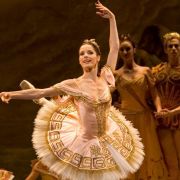
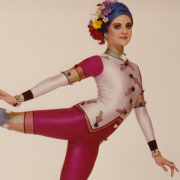
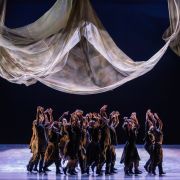
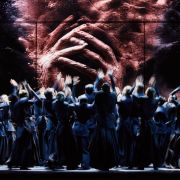
Always welcome this side of the border, Ballet Black paid a lightning visit to Edinburgh, bringing their double bill …all towards hope and Ingoma in celebration of their 25th anniversary. Can it really be that long? Seems like only yesterday they were bravely fighting for recognition for dancers of colour, yet here they are, happily as much a landmark on the dance scene as anybody. And how good they looked in these two contrasting pieces.

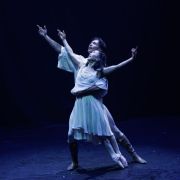
They opened with a new (2026) piece, …all towards hope, choreographed by Hope (of course!) Boykin, not the least of whose credentials include 20 years with Alvin Ailey American Dance Theater. From its title alone it would have been welcome – we are all surely in need of a bit of hope these days – but this was a delight.


Accompanied by a voice-over, we worked through seven sections focusing on community, coming together, positivity in the face of…what? Life as we know it? Given the state of things it could have been harsh and argumentative but it wasn’t: as Emily said, ‘Hope is the thing with feathers, that perches in the soul’.
Boykin’s style is, I suppose, what we used to call ‘modern classical’. We know the company can do hip-hop and all that when they choose to, but here we were miles from that. Rigorous training was clearly there throughout, but they made it look so easy: mostly low-key in tone, they surprised with flying catches and hazardous lifts that always ended in a safe and gentle grounding. Solos and ensembles came and went; one dancer might be set against a line and gradually accepted. The last section was ‘Together We’, and by then we were pretty much convinced.

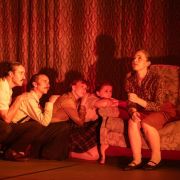
The second piece, Ingoma, made by Mthuthuzeli November in 2019, recalled the South African mining strike of 2012, during which police opened fire, killing 34 miners. Whereas the opening piece was backgrounded by voice, now we had a threateningly percussive beat, mingling, especially in the opening duet, with an anguished cello (although later we heard the Lord’s Prayer in Xhosa).


No narrative but a succession of impressionistic scenes took us through the events. The opening image of a group of miners, their headlamps casting rays of light in the darkness, gave way to a sweet duet for a couple on the verge of parting as he went off to the mine. Although some of the movement for the men had an angry whiff of the war dance about it – stamping, agitation, fear – this was less about the violence of the event than its lasting tragedy, reflected in the women – mothers, wives and daughters. Hints of Rite of Spring collective exhaustion stood alongside individual solos that underlined the extraordinary fluidity of every company member, who all seemed to cope with impossible back-bends and floor-work without even trying.
By the end we realised that, of course, the two pieces were not so different after all: hope was there throughout. You could only wish that, in the real world, protest had such dignity.