The name Morton Feldman immediately suggests a certain sound. To say all his compositions sound alike, however, would be as shortsighted as to suggest that any one sounds the same from beginning to end. Over the course of ten weeks, any such claims are being put to rest in New York City.

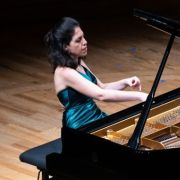
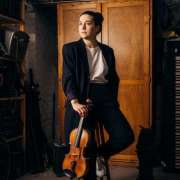
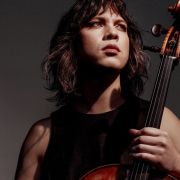
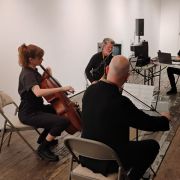
‘The Graphic Content: Feldman and Browne at 100’ festival offers a deep immersion into the sonic realms of Feldman and Earl Browne, who, with John Cage and Christian Wolff, formed the ‘New York School’ of composers. Saturday night brought Feldman's 1980 Trio to the altar at St Michael’s Episcopal Church on Manhattan’s Upper West Side. Like the piano piece Triadic Memories, Trio is an episodic single movement, and was given a beautiful reading by violinist Conrad Harris, pianist Steven Gosling and cellist Alex Waterman.


It begins very much as a trio, immediately interlocking in ways Feldman can sometimes take a half hour or more to achieve, and progresses quickly, shifting often over nearly 2 hours. It breaks what one might think of as the basic tenet of Feldman – the slow repetitions that get him lumped in with the minimalists – but adheres to his true standard operating procedure: shifting time signatures that make actual repetition impossible. Distant church bells marked the 27-minute and the 87-minute points, a reminder from somewhere outside that time indeed did continue to pass.
At the end of the first quarter hour, we first heard the fragmented and grafted phrases that are Feldman’s signature passed among the instruments – a simple tonic on the piano, harmonic intervals from the cello, connective tissue from the violin, never, of course, the same way twice, played with and assured quietude, then dissolving into a three-note violin line, barely a whisper, a recapitulation in the cello, then the piano, individual parts painstakingly assembled, changing shape as they are put together. So tightly constructed were the phrases that a minor mishap on the music stand demanded confidence and presence of mind, and maybe a faint but telling smile, to overcome.


Gosling, Harris and Waterman exhibited mastery of the requisite groupthink, an exemplary, learned ability to play non-unison parts in unison, to layer phrases in ways that felt like a natural order of things. And in a sense, it is a natural ordering. Leaves falling from the same tree don't land on the ground in an order that can be anticipated, but end up arranged in the order that they are. The concert was a forceful near stillness, anything but passive, for an hour and 45 minutes.
Across the back of the apse read the words “I am the bread of life: he that cometh to me shall never hunger; and he that believeth on me shall never thirst." Feldman's music can be challenging. It can be hard to fully take in. It is certainly sometimes seen as boring. But it’s no risk of grandiosity (or blasphemy) to say that if you actually come to Feldman, you will not leave hungry. It’s an embrace of the composer’s magnificence. If you believe in him, then while you’re with him, you shall not thirst.