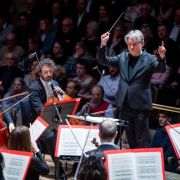
The sonic signature of the Staatskapelle Dresden remains distinct – this is not a generic, sanitised international clinical cleanliness, but a full-bodied sound possessing depth, warmth and multi-dimensional layering. The evening opened with Wagner’s Prelude to Die Meistersinger von Nürnberg. Daniele Gatti drove the score forward with an irresistible forward-leaning rhythm and a fullness of tone. Every section offered pure acoustic luxury: the tuba provided anchoring stability and piercing clarity, the strings retained their legendary silkiness and the low strings anchored the texture with a grounded resonance. Yet, the orchestral body breathed with astonishing buoyancy. The fugal section pulsed with unmistakable energy, transforming music into a brilliant, uncompromised celebration of human vitality that firmly gripped.


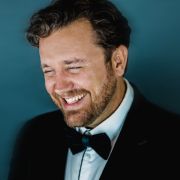
Saint-Saëns’ First Cello Concerto emerged as a multi-faceted diamond, its concise architecture radiating distinct brilliance in every episode. As the Staatskapelle’s Artist-in-Residence this season, it was obvious that Gautier Capuçon had established a flawless mind-meld with the orchestra. His tone, marked by a vocal warmth and acute sensitivity, was immediately arresting. Right from the opening, he dived into the energetic rhythm and vivid nimbleness of the score, intertwining with the woodwinds like a tapestry of blossoming flowers. Then came the second movement, shifting the mood towards an aristocratic refinement. Throughout this journey, Capuçon’s absolute mastery of his instrument, especially of his high register, was thrilling. The whole concerto felt like a single-breath journey, all the way to the fluid lyricism of the finale. Before his encore, Capuçon offered a warm tribute to the orchestra, he then returned with six cellists to perform Jérôme Ducros’s arrangement of Léo Delibes’s Flower Duet from Lakmé. The sheer swing and vocal lyricism of this cello ensemble texture felt completely irresistible—a deeply personal conclusion to his memorable season with the Staatskapelle.
After intermission, Wagner’s Parsifal Prelude and Good Friday Spell opened with a dark, deeply inward string texture. Slowly, within this sustained sonic web, the orchestra summoned the stately Grail motif. The Dresden brass remained wonderfully unruffled and poised, illuminated by the radiant oboe before settling into a state of sheer, holy serenity, standing in stark contrast to the secular, earthly joy of the Meistersinger that had opened the evening. Their reading was a demonstration in supreme patience, without sacrificing acoustic beauty.


Debussy’s La Mer closed the evening in convincing fashion, elevated by Gatti’s acute structural awareness. Beyond superficial programmatic imagery, it stood as a captivating acoustic exercise. In the opening movement, under subtle rhythmic sway, the solo violin and flute cast brilliant flickers of light onto the sonic canvas, leading into a joyful, syncopated episode. The second movement burst forth from the woodwinds in a haze of elusive fantasy; layered string textures engaged in a playful dance, added by muted trumpets to evoke a vivid kaleidoscope of shifting water. In the vibrant finale, low strings conjured thick mists, pierced cleanly by the trumpets, before a magnificent, stately tutti proclamation from the tuba. Against a shimmering tapestry of rolling strings and harps, the winds added a final, blinding burst of sunlight.
Indeed, Gatti's Debussy was the most stimulating performance of the entire evening, transcending mere surface stylistic appreciation. His reading offered a rigorous, technical analysis of how the paint is actually applied to the canvas, leaving the audience with a profoundly deepened understanding of the work's pioneering orchestration and texture.
This concert was promoted by DK Deutsche Klassik