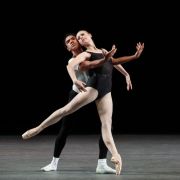
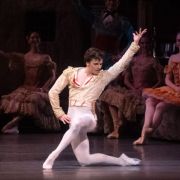
London City Ballet is on a reboot. The company was originally founded in 1978, closed in 1996, and then reopened in 2024, with choreographer Christopher Marney at its helm. It is a tiny company of 12 dancers that specializes in chamber and modern works, rather than the classics. It began a one-week residency at The Joyce Theater and I saw one of their performances this past week.

The big draw of the residency was a chance to see Alina Cojocaru again. Cojocaru was one of the biggest stars of The Royal Ballet and then English National Ballet. Cojocaru once guested fairly regularly at ABT, before she decided to redirect her career away from the full-length classics. She danced in the last piece of the evening, John Neumeier’s Ghost Light.


Ghost Light was created during the pandemic and followed the social distancing rules. Dancers danced in isolation, or with one other person, in self-created “bubbles” that were standard during the covid era. The stage mimicked a rehearsal room with one chair and a lone ghost light. The moody Schubert music added to the gloomy, existentialist atmosphere.

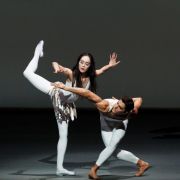
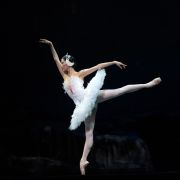
The ballet started with Cojocaru in a swan tutu bourréeing on stage like she was dancing The Dying Swan. Cojocaru might be in her mid-40s, but her liquidy swan arms and majestically arched back made her seem not just like a dancer from another company, but another planet altogether. Cojocaru’s actual role in Ghost Light, however, was frustratingly brief. In an hour-long ballet, she had one pas de deux. The pliancy of her back and the flexibility of her joints meant she still had gorgeous lines. Her musicality was also still there. She’s one of those dancers whose arms seem to move as a reaction to the music. But we barely saw her.
The ballet started off with an interesting premise (a lonely, dark rehearsal room, with various dancers coming and going, as if living out their past lives), but in actuality simply became clusters of pas de deux with little connection to each other. The duets had a very similar look: the Neumeier love of extremely high extensions, falling to the floor, big overhead lifts. The piecemeal score by Schubert did not help. The ballet lacked structure and strongly needed an editor (apparently the original for Hamburg Ballet was twice as long!).


The shorter pieces on the program were excellent. It’s a small company, but the dancers are very capable and diverse. They can do ultra-modern pieces but still dance in a more classical style. Ashley Page’s Mephisto Waltz was a pleasing, bubbly charmer. The Strauss music and old-fashioned tutus gave it a Vienna New Year’s Concert feel.
Soon by Tasha Chu was darker and seemed to start with some young parents getting some obviously bad news from a doctor, and the rest of the ballet is a meditation on that loss. It’s set to “Jesus blood never failed me” and was dark and gloomy. The couple dance a pas de deux, then they are joined by four figures (angels or spirits?). Whatever it was, it was compelling.

Jerome Robbins’ Quiet City was the best ballet of the program. There is a tragic backstory: it was created in 1986 for New York City Ballet after the tragic death of principal dancer Joseph Duell. Everyone is dressed in white bodysuits, and the piece is obviously inspired by Balanchine’s Serenade, another ballet about death and the afterlife. The steps are simple and almost homespun, in the Robbins style. The London City Ballet dancers were gorgeous.
A few notes on the company: the dancers have a clean, unaffected style; one hopes they might expand into a bigger company, but for now, this is a small chamber company worth following.