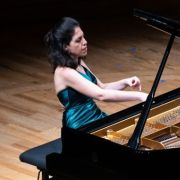
Saratoga Performing Arts Center celebrates its 60th anniversary this summer, and the Philadelphia Orchestra has been its stalwart artistic partner since Day 1. Emanuel Ax first appeared here with the Philadelphians in 1978, and he’s returned more than 25 times in the ensuing 48 years. It made perfect sense, said SPAC president Chris Shiley in pre-concert remarks, that Ax would join the orchestra to mark the midway point of their summer residency with a towering performance of Beethoven’s Piano Concerto no. 4 in G major.

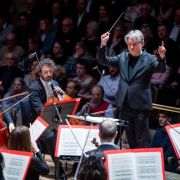
Ax knows this music backward and forward, but there was nothing perfunctory about his interpretation here, realized in collaboration with guest conductor Daniele Rustioni. When the pianist took an expansive view of the first movement’s opening chord, you knew you were in for an exciting and immediate performance. The orchestra responded with an insistent roar – a sign that the famous clash between the solo writing and its complement would be very much in evidence.


Adjectives such as ‘mystical’, ‘dreamlike’ and ‘ethereal’ are often applied to this concerto, particularly in the Allegro, where the piano can seem lost in a world of trills and slurs. Ax seemed intent on bringing a greater gravity to his playing, with heftier articulation of phrases that reached beyond a merely beautiful sound world. He pedaled freely throughout the cadenza, even more so than required by the score, which added a burnished, brawny color to the playing. Rustioni’s precise control of dynamics was an ideal match: whispering or shouting, the orchestra consistently gave the right response.
The narrative second movement found roles reversed: the piano became quiet and subservient with Ax’s filigree playing, while Rustioni whipped up a frenzy in the strings. If you take the programmatic view that Beethoven was depicting Orpheus subduing the the furies in Hell, this interpretation suggested a grim futility in that task. But the gripping drama resolved itself joyously in the Rondo finale, dispatched with such speed and brio that the audience could barely catch its breath before breaking into applause.
This was the best way to encounter a familiar work: with fresh eyes and not an ounce of sentiment. Ax brought the same quality to his encore, the Liszt arrangement of Schubert’s Ständchen.

Rustioni paired the Beethoven with Brahms’ Symphony no. 1 after intermission – a natural choice, given the younger composer’s idolization of the master. Again, he and the Philadelphians offered an interpretation that felt fresh and invigorated without relying too heavily on stylistic meddling. After barnstorming through the opening salvo, Rustioni gave the music room to breathe, particularly in his lush and unusually spacious treatment of the third movement. He highlighted lyricism throughout, especially in the woodwinds throughout the second movement, and even the majestic horn calls that sound the finale had a fabulous sense of refinement. The passionate playing throughout communicated a pure joy in music-making that was infectious to the audience.


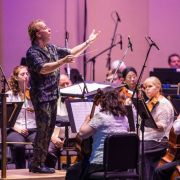
So, too, was Rustioni’s presence on the podium. I’ll not soon forget him levitating in the air as he linked the second and third movements of the Beethoven, bouncing like a child who got exactly the present he wanted on Christmas morning. Or how he nearly knelt down into the first violins during a hair-trigger tempo adjustment in the Brahms. But what you achieve from the podium matters more than how you behave on it, and in that respect, Rustioni displayed an ideal, sustained sense of control.
Cameron's press trip was funded by the Saratoga Performing Arts Center