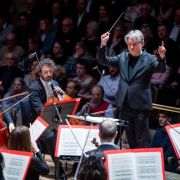
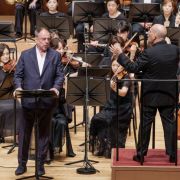
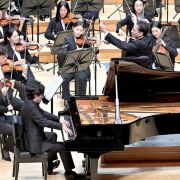
At the Seoul Arts Center, Jaap van Zweden and the Seoul Philharmonic Orchestra offered Beethoven’s Symphony no. 9 in D minor on its own – no overture, no concerto. Lasting roughly an hour, it treated Beethoven’s disputed metronome marks less as provocation than instruction, trading bloom for voltage. The sound carried an historically alert tint: vibrato pared back, articulation sharpened, strings kept on a lean dynamic diet – modern forces speaking with tighter consonants while retaining full brass and percussion.

In the Allegro ma non troppo, un poco maestoso, the opening fifths arrived not as mist but as a quiet boil, nervous heat contained in a small sound. Van Zweden pressed on; the strings answered with grain at the edge of the tone, clarity purchased by exposure. Dotted rhythms bit; inner parts stayed legible; the span held without rhetorical brakes. Yet at this speed Beethoven’s chiaroscuro could flatten. In the development, the fugato that should split into strands sometimes sat in low contrast, the lines merging into a grey wash. Crescendos had thrilling thrust, but could feel pre‑lit – the light arriving before tension had time to gather.


In the Molto vivace, van Zweden’s method paid off. Timpani drove with predatory insistence and the orchestra’s internal clock held through hairpin turns with impressive nerve. The sound was deliberately untamed, rough‑edged rather than polished, and the risk gave the movement a physical charge. The Trio changed the air at once; woodwinds projected the tune with a clean profile, phrases neatly aligned. But the relaxation Beethoven promises here was fleeting. The gear‑shift compressed the pastoral into passing scenery before the Scherzo’s grit snapped back into place.
The Adagio molto e cantabile refused plush consolation. Variations kept moving and wind colour registered clearly, but the cantabile often felt more sketched than sung. With little time granted to resonance, the long arc did not always settle; lyricism registered as tensile beauty, not deep ease.

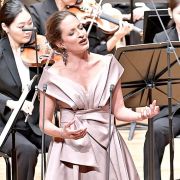
The Finale held the conception’s strength and fragility in the same frame. Cellos and basses delivered the opening recitative in strict tempo; the Ode to Joy theme entered without theatrical delay, not so much dawning as appearing, already in motion. The Alla marcia flashed – piccolo and percussion cutting through the orchestral texture – with headlong brilliance. The orchestra met the high‑wire pacing with discipline and bite, and the chorus, drilled and resilient, negotiated the speed with admirable grit. But the vocal writing exposed limits: the solo quartet struggled to blend and at points of transition the seams showed, the margin for breath deliberately slim.


The last chord split the hall. Some were on their feet, applause cutting into the dying resonance; others headed for the aisles as the sound evaporated. Van Zweden’s Ninth had fierce will and raw voltage, but it suggested a wine drawn from the cask a little too soon, its vintage and structure already clear, the flavours not yet fully knit.