For the third program in the Philadelphia Orchestra’s annual four-concert series at Carnegie Hall, and as a centerpiece in the Hall’s United in Sound: America at 250 festival, Principal Guest Conductor Marin Alsop led an exhilarating evening pairing the New York premiere of John Adams’ The Rock You Stand On with Hayato Sumino’s orchestral debut in Gershwin’s Piano Concerto in F, and a wide-ranging selection of excerpts from Prokofiev’s Romeo and Juliet.

Composed as a tribute to Alsop, the composer’s close friend and longtime collaborator, The Rock You Stand On had its world premiere in Philadelphia last October. An energetic work that plays out in a single ten-minute movement, it starts with minimal strokes from the strings, winds and brass that evolve into jazz-accented rhythms bouncing around from one section of the orchestra to another. In a program note, the composer describes the title as “non-specific” and suggestive of qualities – loyalty, determination and devotion – embodied by its dedicatee. Alsop’s intensely assured directing style maintained a precisely defined, suspenseful pulse and drew wonderfully transparent textures from the huge orchestral forces (including two harps, a large wind section and a wide array of percussion and keyboards). While the sparkling performance was technically impressive and served as a bright and lively concert opener, the work itself seemed unresolved and proved a less than deeply revealing composition.
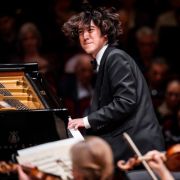
Things got more interesting after pianist Hayato Sumino came on stage. Sumino, an artist who defies easy categorization, first came to global attention as a semi-finalist at the 2021 International Chopin Competition in Warsaw. He is also a composer, arranger, improviser and popular YouTube creator (AKA “Cateen”), with 1.55 million subscribers. Returning to Carnegie Hall after his November 2025 solo recital debut, he delivered an invigorating interpretation, blending classical elegance and jazz-flavored pizzazz. After a zippy opening Allegro, his playing relaxed splendidly for a superb rendering of the poignant solo trumpet opening of the Adagio before launching into a memorable account of the whole nostalgic movement, subtly leaning into the blues-flavored notes and giving the music a strongly improvised feeling.
Throughout the whole performance, Alsop and the Philadelphians played a major role as a resplendent and highly responsive percussive partner, especially in the relentlessly paced finale. Orchestral highlights of the movement included the lush statements of the strings, the nostalgic echoes of the flute and the final, hammering strokes of the timpani. As an encore, Hayato offered more Gershwin: a delightful rendition of his own virtuosic solo arrangement of nine variations on the theme of I’ve Got Rhythm.

The second half was taken up by Alsop’s own selection of excerpts from Prokofiev’s three orchestral suites from his ballet Romeo and Juliet. Though arranged for dramatic contrast rather than strict adherence to storyline, the twelve-part sequence emerged with a keen sense of narrative drama. Conducting from memory, Alsop elicited a vibrant, tightly controlled interpretation that highlighted the ensemble’s precision and broad expressive range. Under her authoritative baton, the musicians successfully conjured up every mood, character and incident in each of the well-known tableaux – including (but not limited to) the arrogance of the feuding Montagues and Capulets, the vibrancy of the Morning Dance, the warmth and naïveté of The Young Julliet, the brutality in The Death of Tybalt and poignancy in The Death of Juliet.
The evening ended on a bright and raucous note with an especially lively orchestral encore: the General Dance of Enthusiasm and Apotheosis from Dmitri Shostakovich’s 1931 ballet, The Bolt.