Edinburgh International Festival Director Nicola Benedetti put in a special request to Rafael Payare, Music and Artistic Director of the Orchestre symphonique de Montréal, to bring all three parts of Samuel Coleridge-Taylor’s epic work, The Song of Hiawatha, complete with overture, for its debut festival performance.

A work based on legends collected by Henry Rowe Schoolcraft from the Ojibwe indigenous people, put into a famous poem by Henry Wadsworth Longfellow, a white American, and then set to music by an English black composer raises all sorts of questions, even more so to reflect changed attitudes today. Dr Uchenna Ngwe, an expert on Black British classical musicians, and Anton Treuer, Professor of Ojibwe at the University of Minnesota, were our guides. Greeting us enthusiastically in the Ojiwbe language, Treuer emphasised that the Ojiwbe tongue, culture and legends are very much still alive, the tribal lands stretching from Montréal running generally north of the Great Lakes straddling the Canadian–US border westwards to Montana.


Hiawatha’s Wedding Feast was so successful that Coleridge-Taylor composed an overture to go with it, then The Death of Minnehaha and finally, Hiawatha’s Departure. At one point, there were more performances of Hiawatha than Handel’s Messiah, particularly at the Royal Albert Hall with Sir Malcolm Sargent, the work also appealing to – and challenging – the many large choral societies of the time. With Longfellow’s dense texts and lush orchestration, the choir, on their feet for most of the performance, is tasked with the vivid storytelling.

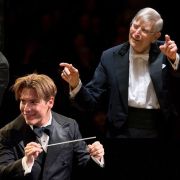
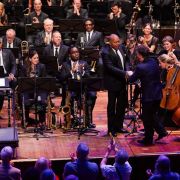
In the opening Hiawatha’s Wedding Feast, Payare held nothing back, the OSM embracing the tuneful score with gusto. The large Edinburgh Festival Chorus introduced us to the gentle musician Chibiabos, the boaster Iagoo and to old Nokomis, Hiawatha’s grandmother, preparing the feast. A huge climax “O Pau-Puk-Keewis” and a stunning a cappella “Thus the gentle Chibiabos” were highlights, Nicky Spence’s clear tenor enjoying the famous “Onaway! Awake, beloved!” solo, a piece in many a tenor’s repertoire. Payare balanced his forces well, heroic horn and brass playing, cooking up a whirlwind “heaping the shores with sand dunes”, yet more lyrical in the few quieter passages.
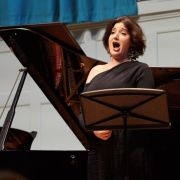
The drama intensified in the Death of Minnehaha, beginning solemnly with tuba growls personifying the “long and dreary winter”, baritone Christopher Maltman and soprano Francesca Chiejina both in bold voice personifying Famine and Fever entering Minnehaha’s wigwam. The chorus took us through Nokomis moaning, Minnehaha’s demise, a flashback to summer days and Hiawatha’s dash back through the forest, all too late. Chiejina’s sensitive “Hark, I hear a rushing” with soprano and alto echo was poignant, but for all its solemnity, the music was cheerfully restless, culminating in a huge finish as Minnehaha departs to the Land of the Hereafter.


Giving the choristers a welcome break, the sumptuous filmic overture, with its jaunty tunes and gently rocking melodies, was full of colour, the energetic Payare urging his players ever onward, both feet off the ground at one high point. Hiawatha’s Departure piled on more drama, the soloists in declamatory form, chorus shouting “Wah!” and the sudden appearance of pale-faced missionaries, Spence stentorian in his potted crucifixion and resurrection summary. The final farewell, Hiawatha setting out west in his birch canoe was triumphal, the Usher Hall organ adding gravitas.
The Song of Hiawatha is a bulging piece of Victoriana, with a whole lot of detail to take in. Musically tuneful, the orchestral score is unforgivingly muscular, but in this performance an animated Edinburgh Festival Chorus and three strong soloists served us splendidly. A rare chance to reappraise a work shelved as unfashionable is exactly what festivals are for.