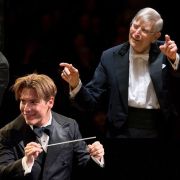
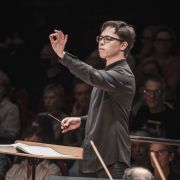
The Los Angeles Chamber Orchestra kicked off its star-studded new season at The Wallis in Beverly Hills with a one-hour sampler of what it has in store. It was conducted by LA Opera's Resident Conductor Lina González-Granados with four curated works whose distinct traditions – Hungarian dance, Harlem Renaissance poetry, Andean memory and Spanish ballet – provided music of crossing, collision and shared imagination.

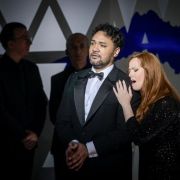
The centerpiece was the world premiere of Carlos Simon’s Afterparty, written for the celebrated countertenor John Holiday, with an orchestra of strings, harp and percussion. Told in six poems written during the flowering of Black American art that followed the launching of the Harlem Renaissance in 1924 at the Civic Club in downtown Manhattan, the conversations, arguments, flirtations, spiritual searchings, collective exhilaration and dark reality give Simon, a composer with gospel, jazz, concert music and theatre in his musical bloodstream, a generous dramatic frame in which to work, and the freedom to move beyond the page.


In Gwendolyn Bennett’s To a Dark Girl, tenderness and supplication give way to a searching emotional terrain. What the Mirror Said arrives in vivid slashes of color and feeling, its repeated declarations of self becoming a brilliant theatrical engine. Little Brown Boy is perhaps the most touching setting, with the orchestra hovering between partner and witness.
Simon’s best moments come when the solo voice and ensemble create more public spaces. To… gestures out toward Broadway; The Crisis, setting John Wesley Work’s mordant It’s great to be a problem, becomes an extended meditation on identity, restriction and resistance, reaching beyond art song into something like spiritual, cabaret and political testimony at once. A Prayer ends the cycle on an inward, unresolved note, suggesting a fragile private faith beneath the larger public statement.

Holiday, for whom Handel would certainly have written an opera, evoked the echoes that Simon summons up in a voice that could be more neon than his suit and sweeter than Deanna Durbin, with touches of Judy Garland and Dorothy Dandridge in between, and melismatic touches entirely his own.
The sound world of Gabriela Lena Frank's more introspective Elegía Andina grows from a broad orchestral landscape, passing through a bout of tense, mechanistic energy in which rhythms and memories become hope. Although not intended to imitate the country's iconic panpipe tradition, Frank's resolution features two flutes with obvious implications, and it was no wonder that the two flutists, sporting broad smiles, deserved their bow.


The framing works were more problematic. Kodály’s Dances of Galánta began with a beguilingly entangled string weave and featured superbly played wind solos, but the reduced lower strings – four cellos, two double basses – could not supply the weight or flexibility the music asks for, while González-Granados kept its narrative moving with clarity, though without much room for the individual riffs to fully bloom. Falla’s Three-Cornered Hat Suite no. 1 similarly benefited from LACO’s alert woodwinds and admirable intentions overall.