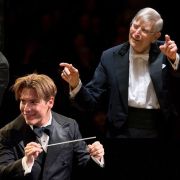
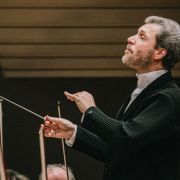
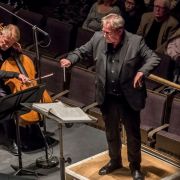
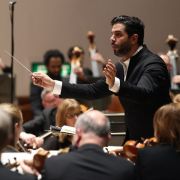
For this bleakest of end-of-term parties, Kahchun Wong delivered a roof-raising performance of Mahler’s destructive Sixth Symphony to close the Hallé’s season. Here performed without any other work to preface it, Wong’s broad tempos and hyper-vigilant attention to intricate detail made for an ultra-rich tapestry of soundscapes, though with directorial idiosyncrasies sometimes getting in the way of the music.

There was an enormous amount to admire in this performance, chiefly from the orchestral musicians and in spite of – rather than thanks to – the direction. The solo playing from woodwinds and brass was richly characterised, and the string sound, especially in the slow movement, was lusciously plush. The slow tempos and ample rubato might have risked exposing some inaccuracies in the more challenging passages, but each of these was navigated with utmost accuracy. This was particularly the case in the outer movements, with the march of the first generally proceeding with grim inevitability at an uncommonly steady pace. This slowness added a certain sinisterness to the music, especially when combined with the aggression behind the rough-hewn tramp of the opening cello and bass line. By contrast, the second theme was suffused with the soft light of some fine flute playing, with distant bells ringing as if from the fields of the Peak District.


In opting to retain Mahler’s original sequence for the inner movements (Scherzo–Andante), the second movement continued the A minor bleakness of the first. The main body of the Scherzo might have been nastier or wilder, though the steady pulse again gave light to ultra-HD detail. In the central trio passage, there was some meticulously crafted woodwind articulation. Wong’s doubling of the harps to four in total, and the stage-front positioning of the celesta were both inspired manoeuvres. The slow movement, perhaps the composer’s greatest, was the highlight of the performance. With that glorious string sound and some exquisite horn solos, the music unwound with leisurely Alpine serenity. There was momentary urgency at the movement’s climax, but the blissful stillness of the last pages was magical.

The finale unfolded with a less clear sense of architecture and, although the orchestral playing was again superb, the frequent rostrum interventions threatened to distort the shape of the music. While Wong’s hyper-literal direction – indefatigably busy and often micromanaging individual notes – can be distracting to watch, his musical interventionism is more problematic. A jarringly huge moment of silence at the climax of the finale’s great brass chorale was the most egregious change in this performance. That said, individual set pieces came off with thrilling vigour, memorably so in the two truly monstrous hammer blows and some spectacular playing from the extended brass section. The ascent into the coda saw some further outstanding woodwind playing, with wonderfully delicate oboe staccato leading the way. The last minutes were every bit as dark as necessary and the reception was rapturous.


The evening’s programme booklet notes Wong’s apparently “world-renowned affinity for Mahler’s work”. His Second Symphony last year with this orchestra was certainly hugely successful, but both this evening’s account of the Sixth and his early First suffered from an excess of artistic interventions from the rostrum. Wong no doubt has a lot to say about this music, but sometimes one wishes it could just be allowed to speak for itself.