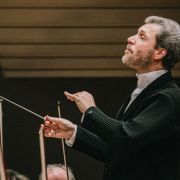
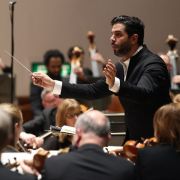
With polite applause still rippling around the hall, the BBC Philharmonic Orchestra only just seated and with barely one foot on the rostrum, John Storgårds threw out his left hand to cue the wild tremolo which opens Mahler’s Resurrection Symphony. Not for him was the customary long pause and deep breath before tackling this mountain of the repertoire. It was a moment of gut-wrenching immediacy, breathtaking in its unexpectedness and setting the tone for a perfectly weighted performance which captured every subtly and catastrophe of this titan of the repertoire.

Closing out a concert season with this guaranteed crowd-pleaser is one thing, but to haul an audience through an emotional ringer as brutal as tonight’s is quite another. With scarcely a chance for anyone to draw breath after that opening tremolo, the cellos and basses positively erupted with their semiquaver opening figures. As would be the case throughout, the ensemble was immaculate. As the first movement panned out, there came an uneasy sense of grim inevitability in the relentless tread of the funeral procession. Even in the magical stillness of the softer passages, with elegant cor anglais solos neatly conjuring Alpine pastures, there was a sense that the militarily precise rhythms of the low strings were not far away. Storgårds’ pacing never felt hurried; in several places he eschewed frequently observed (though unscored) accelerations in tempo, ensuring that the whole thing had a sense of monumental gravitas.


The second movement’s Ländler was fluid and gentle but, as in the first movement, even the moments of serenity were haunted by a growing sense of unease thanks to the ever more animated wind entries. Similarly, the Scherzo’s Sermon to the Fishes carried all the requisite fishy slipperiness in the wonderfully fluid woodwind solos (alternating with some astonishingly crisp staccato) though with ever mounting sense of desperation in the brass interjections. Sections flowed into one another with seamless elegance, with a sense of chamber music frequently evident as players half turned to their colleagues to pass musical lines across the stage with utmost care. Storgårds’ sense of the whole symphony’s architecture was always plain to hear, though, with the intensity reaching its peak just at the right moment for the tumultuous, shrieking climax of the movement.

That same death shriek returned later, after Staphanie Irányi had sung Urlicht with magical softness, matched by the exquisite pianissimo tenderness of the brass section and later the solo oboe. As the catastrophe of the finale’s opening died away, the low strings took up their demisemiquavers with ferocious intensity. If the intonation of some of the offstage playing occasionally wobbled, this was easily compensated by the remarkable theatre of stationing offstage trumpeters in four corners of the auditorium at choir circle level. On the stage itself, there was no excess of sentimentality as the pace steadily gathered, with the March of the Dead positively rollicking along. After a couple of further shattering climaxes, the seated CBSO Chorus finally sang. At the forwards-looking tempo, Klopstock’s hymn remained unsentimental though sung with totally compelling warmth. The impression was of honest and increasingly impassioned excitement about the impending resurrection. As momentum gathered, Siobhan Stagg’s exquisitely controlled soprano added to the atmosphere of electric anticipation. The final pages with towering choral sound, clamouring Liverpudlian Forever Bells and thundering organ were, of course, shattering. The BBC Radio 3 broadcast on 7th July is not to be missed.