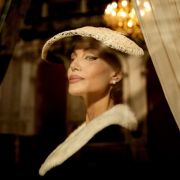
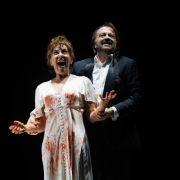
Natalya Romaniw is box office, which is why her fascinating countenance adorned the programme cover for this enjoyable Prom. Well, the camera never lies, and neither did the BBC’s microphones as the Welsh soprano delivered a heartstopping performance of the Four Last Songs by Richard Strauss. Romaniw’s timbre is captivating, her tone resplendent and her power mesmerising. A rich intelligence infused these songs with deep emotions and suggested that her journey towards Isolde starts here.

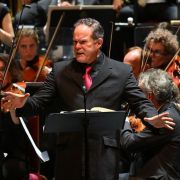
The impact of Romaniw's reading was intensified by some outstanding playing from within the BBC Scottish Symphony Orchestra, notably the impeccable horns in September and the sublimely lyrical solo playing of guest leader David Guerchovitch in Beim Schlafengehen. The Polish conductor Paweł Kapuła led a pitch-perfect interpretation within which the singer was able to flourish.


For gothic horror, few poems can match Erlkönig. Goethe’s verse ballad is short but shuddersome: in eight short stanzas we visit dreadful events that befall a terrified child whose father is blind to an evil truth until it’s too late. Amid the pathetic fallacy of dark night and gusting wind, a lost boy is doomed to be snatched away by an unseen force of pure evil.
A work of primal fear, then, rather than adventure, and Schubert’s own apt setting feels like a ride into hell. In 1996, Hans Werner Henze composed a brief orchestral fantasy for large orchestra that surges along with all the earlier composer’s evocation of speed and urgency but with none of the dread. It has immediate appeal – and my, does it gallop – but the composer trades fright for excitement. A cynic might call his version an audience-pleaser with its panoply of tuned percussion and kaleidoscopic orchestral colours, but to trade terror for excitement is to miss the point. It’s the thrall of the Erlking that matters, not the thrill of the chase.

Kapuła and the orchestra used Henze’s miniature as the curtain-raiser for a variegated Prom and they made hay with it. Benjamin Britten’s light-touch chamber arrangement of What the Wild Flowers Tell Me, the second movement of Mahler’s Third Symphony, made an tender impression thanks to its limpid instrumentation.


Less happily, in Kapuła’s hands the delicate threads of Schubert’s ‘Unfinished’ Eighth Symphony did not knit comfortably into a coherent whole. It lacked flow. Moreover, the performance was marred – in the auditorium at least – by string playing during the first movement that was all but inaudible to the naked ear. Was the experienced young Pole conducting for the microphones rather than the audience? If the BBC’s sound checks were undertaken through headphones, that may well be the case. But hundreds of paying patrons deserved better.