If Gustav Mahler hadn’t gone on to write his great symphonies and song cycles, I doubt we’d pay very much attention to Das klagende Lied today. He started it when he was still a teenager, and it’s pretty much his first large scale work, a cantata for orchestra, soloists and chorus that runs to more than an hour and, viewed in retrospect, seems to set out the stall for a composing career that was to spend much of its time on the large scale and, as often as not, the vocal.

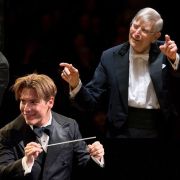
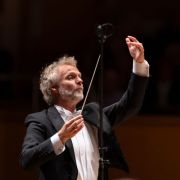
So it’s very much a youngster’s piece and, therefore, it isn’t surprising that it’s clunky both in its shape and in its often heavy-handed orchestration. Nowadays we’re mostly interested in it for the foreshadows of his later work that it contains, but there are plenty of those and, of all the orchestras in Scotland, there can be few better qualified to draw these parallels than the BBC Scottish Symphony Orchestra, who are steeped in Mahler’s music, having played most of his symphonies under the leadership of their former Principal Conductor Sir Donald Runnicles, now Conductor Emeritus. Runnicles himself was back on the podium to conduct them in this concert, so the Edinburgh International Festival really couldn’t have assembled a better team to make the case for this piece.


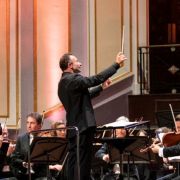
Runnicles conducted it as though it were a mature masterpiece. Not even he could overcome the longueurs and the repetition, but he lavished the care and attention required to make it breathe and he achieved impressive coordination with the hidden offstage band, which alone consisted of 19 musicians. The orchestra brought dark beauty to the string passages, plenty of colour in the winds, and a healthy dose of conviction in the brass.
The choral writing isn’t a patch on what Mahler would later achieve, but the Edinburgh Festival Chorus gave it their best shot, more convincing in the bacchanalia of the wedding feast than in the perpetually wilting first movement. The 23 girls of National Youth Choir of Scotland brought entirely different, utterly compelling colour to their brief appearances as the voice of the murdered brother. You couldn’t ask for a better quartet of soloists and they didn’t seem troubled by vocal writing that’s so fragmentary it’s almost comical. Kathleen O’Mara’s luxurious soprano balanced the subtle lustre of Catriona Morison’s mezzo, and both tenor John Findon and baritone Nicholas Brownlee achieved clarion power in their outbursts.
It was a much smaller, chamber-sized orchestra that played Schubert’s “Unfinished” Symphony, a fact that heightened the febrile energy and transparent intensity of the music. Over the sepulchral darkness of the opening, a smooth legato was cast, giving the cellos’ and basses’ opening motif an extra quality of danger for being all the more seductive. The quivering string opening, over which a keening oboe sang a melody of beauteous sadness, seemed to underline the transitory nature of any happiness in this musical world. This was Schubert of lengthy shadows, even in the major key passages, and Runnicles conducted with remarkable economy of gesture which the orchestra met with lithe responsiveness. This meant that that fortissimo outbursts could erupt seemingly out of nowhere, an especially devastating effect in the slow movement, where the major key moments felt like transitions in the midst of tragedy rather than moments of respite. The central development of the first movement, however, was like an earthquake of emotional intensity, every explosive orchestral outburst taking us closer to the edge of the abyss. Not even the beatific string theme of the slow movement could fully take us back from there, and Runnicles’ achievement was to live with the duality of the emotional extremes rather than try to resolve them.