Today, people are often encouraged to pursue multiple careers at once. This brings financial diversity and personal fulfillment. Over a century ago, Gustav Mahler lived this exact way. During his busy years in Vienna, he still wrote massive symphonies during just a few quiet summer weeks. With two sandwiched Nachtmusik movements, the Seventh Symphony’s complex five-movement structure creates a formidable symmetrical frame. The musical emotion, on the other hand, shifts constantly between shadow, grotesqueness and explosion.

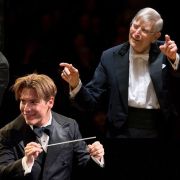
At the Elbphilharmonie, Klaus Mäkelä conducted the Royal Concertgebouw Orchestra through this jungle. It proved to be a long, uneasy journey that earned its satisfying destination. The opening Adagio began at a slightly slower pace. The dark unsettling rhythm trembled intensely in the low strings and winds. Tenor horn, tuba and bass drum joined to produce tension. This sombre introduction vividly evoked an image of nature's roar. The music then swung uneasily between grotesque march figures and bittersweet despair. The horn calls led into a passionate Allegro con fuoco, a brief comforting solo violin offering a moment of release. Although the execution of the recapitulation felt slightly stagnant, the final acceleration delivered an intense resolution.


Mäkelä navigated the second movement (Nachtmusik I) between warmth and shadow. Muted horns called out over vast distances, answering woodwinds like woodland birdcalls. Beneath this rustic calm, the orchestra drew out a persistent march rhythm. Some melody, reminiscent of Des Knaben Wunderhorn’s soldier songs, drove the music forward toward darker destiny. Tackling the texture shifted from military march to a seductive dance, the RCO vividly painted a unsettling midnight scene.
Mäkelä was probably most at home in the third movement Scherzo. Marked Schattenhaft (shadowy), this ghostly waltz whirled like a dance with death. The RCO generated believable images that evoked the phantoms of the night. It was a devilish dance, moving away from the light into a twilight world. Solo strings entered with skeleton-like precision, dragging listeners back to cold reality. The music, probably one of Mahler's darkest nocturnal visions, eventually dissolved into near silence.

The following second Nachtmusik provided a contrast of homely comfort. A reduced orchestra performed a sweet serenade. Soft woodwind ensembles mingled delightfully with plucked strings, mandolin and guitar. Solo violins established a tender atmosphere. Even so, a slight ghostly chill remained in the air.
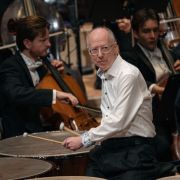
Night vanished in a single stroke as the timpani introduced the final movement. Horns and trumpets immediately proclaimed a solid principal theme. This extensive Rondo-Finale expanded traditional forms into a grand series of episodes. The RCO brilliantly juxtaposed broken images. Being one of the most impressive moments of the evening, several fugal passages built fierce muscular tension, while the brass delivered a collapse reminiscent of a band of clowns falling on top of each other. Mäkelä chose an athletic tempo, driving the massive orchestra toward a determined finish.


What began in gloomy instability ended as a glossy light over catastrophe. These 80 minutes were hardly an easy listen. It felt like walking through Goya’s dark Caprichos etchings, where nightmares and reality blur. Fortunately, the ending was affirmative, unlike the depressing Sixth Symphony.
This concert was promoted by DK Deutsche Klassik