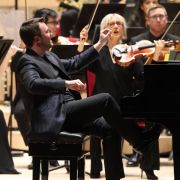
The first night of a new season at the Royal Liverpool Philharmonic Orchestra is always a bit of a party. But, somehow, this time it felt a little bit different. Chief executive Vanessa Reed took to the stage to tell the audience about the busy summer the orchestra had just had and how pleased she was to welcome the loyal audience back to Philharmonic Hall. So far, so good. The family was back at home, all together.

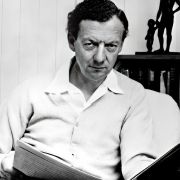
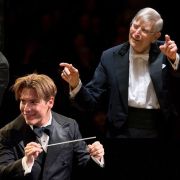
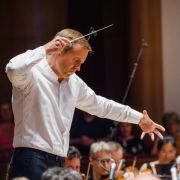
Except, there was a stranger in the midst. A most welcome stranger, by the way, but nevertheless one who is not often seen in these parts. That stranger came in the guise of the Britten Cello Symphony, expertly and sensitively played by soloist Guy Johnston. Andrew Manze, who has just conducted a performance of the frenetic Festive Overture by Shostakovich, spent some time revealing the connections between the two pieces. Shostakovich and Britten developed a close friendship and Britten, well established as a major, internationally-recognised composer by the early 1960s, had been impressed by Mstislav Rostropovich’s performance of the Russian composer’s First Cello Concerto in 1959. Perhaps more to the point, Britten had just triumphantly presented his War Requiem, that gargantuan anti-war statement, in May 1962. Five months later, the world held its collective breath as the Cuban Missile Crisis threatened to tip the world into yet another conflict which would probably have all but destroyed the planet.


Against that background, the Cello Symphony emerged. It’s a complex work, tortuous even. It is as cerebral as it is searching. It eats at the soul of the performers as well as the audience. Its brooding nature only finds respite in the finale and, if anything, the quiet dynamics demanded for much of the piece made some of the cello detail a little difficult to follow. But that, really, is a minor point.
The opening Allegro maestoso was achingly genuine, with Johnston allowing the cello to sing just occasionally almost as though it was trying to break away from the soul-searching demanded of it. The Presto inquieto second movement was frantic with much of the movement sotto voce, verging on being reticent. The Adagio was the highlight, its subtlety and lyricism bringing beauty to the intense proceedings. Johnston’s highly complex cadenza was a real tour de force. The Passacaglia, allowed the light – at last – to break through.
Johnston’s encore brought more intensity to the performance, this time in the shape of the coda from Britten’s Third Cello Suite, again written for Rostropovich, and including a Russian Kontakion, or hymn for the dead.

Familiar fare was back on the menu for the second half in the shape of Elgar’s Enigma Variations. The performance was preceded by Manze shedding new light on the ever-elusive Enigma. It was fascinating to hear the first violins and cellos combine the Enigma theme with Auld Lang Syne or even the National Anthem (on solo trumpet). There was a real sleuth moment when he linked Dorabella’s variation with Rule, Britannia!. Dora’s surname was Penny, the old penny featured Britannia on the obverse and, if played slowly, five notes of Rule, Britannia! correspond to a similar sequence in the Enigma theme. Well, it kept the audience amused and, after all, the concert was entitled ‘Unveiling the Enigma’. This was a polished performance, graceful where required, exciting, soul-searching (cue, naturally, Nimrod) and a massively exciting finale.


That excitement began with a searing performance of Shostakovich’s Festive Overture. After all the exuberance of the overture, Manze whispered – extremely audibly – that, at the time of writing the piece, Stalin had just died.