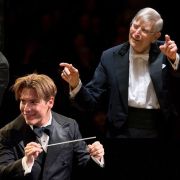
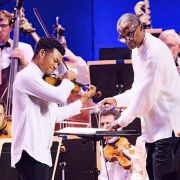
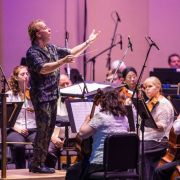
Andris Nelsons and the Boston Symphony Orchestra arrived defiantly in New York for their annual two-night stand at Carnegie Hall. Just over a month ago, the orchestra’s leadership terminated Nelsons as Music Director, effective at the end of next season, vaguely citing a lack of shared vision for the future of the institution. The musicians, who were not consulted in the decision, responded with indignant protest. As has become common at Symphony Hall in recent weeks, they entered en masse, the majority wearing red carnations on their lapels as a sign of solidarity with their maestro. Many in the audience similarly donned red flowers, and the plentiful applause was emotionally charged.

Other than that, Mrs Lincoln, how was the playing? A frequent complaint lodged against Nelsons is a lack of consistency in his conducting, whether in New York, Boston or at Tanglewood. That was in evidence here – though in the concert’s best moments, the connection between Nelsons and his players seemed without rival.


The program’s first half, an arrangement of three scenes from John Adams’ opera Nixon in China, found the BSO outside their comfort zone, with the blunt force of their strings and woolly tone of their woodwinds lacking the shimmer that can give this composer’s repetitious rhythms a hypnotic glow across modulations and key changes. The brass did a better job depicting the clamorous landing of President Nixon’s plane, and the Tanglewood Festival Chorus, prepared by Lisa Wong of the Cleveland Orchestra, imparted Alice Goodman’s wordy libretto with dexterous diction and precise intonation.
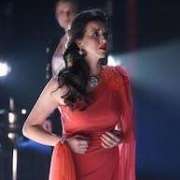
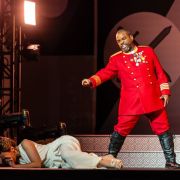
As Richard and Pat Nixon, Nelsons had on hand Thomas Hampson and Renée Fleming, fresh from essaying the same roles in Paris. Singing without scores, they brought a level of authority to the music that built character in a matter of minutes. Hampson’s lyrical baritone has retained its volume and style while simultaneously losing much of its color – still, the current state of his voice added an urgent quality to “News”, the president’s anxious examination of his potential place in history. Fleming elicited great sympathy in “This is prophetic”, the core of her voice supple as always, even as ascending scales sounded more hard won. The men of the Tanglewood Festival Chorus sang lines assigned in the libretto to Zhou Enlai, their massed sound ironically suggesting a collectivist society and China’s rising status as a world power.

The BSO’s concert was presented as part of an ongoing Carnegie Hall initiative, ‘United in Sound: America at 250’. Fittingly, the latter half of the evening was given over to Dvořák’s Symphony no. 9 in E minor, “From the New World”, perhaps the most hopeful evocation of this country’s potential ever sketched. If Nelsons’ interpretation didn’t break the mold in any perceivable way, it was consistently correct and thrilling, with juicy playing in the high and low strings where it counted. The winds teased out much poetry in the themes of the Largo, and the opening bars of the Finale bristled with tension, balancing lushness with fire up to the conclusion. Transitions were seamless, which is not always a guarantee with this orchestra. The brass section, having a good night all around, stood out once again where it mattered.


There was an energy and urgency to the BSO’s playing, and to Nelsons’ presence on the podium, that wasn’t in evidence when I last encountered this outfit in situ several months ago. One could speculate the Dvořák staple found them on their most comfortable footing, or that this team didn’t know what it had until it was almost gone. The players seemed to be shouting from the stage that they had more stories to tell – a message the adoring audience clearly received with open arms.