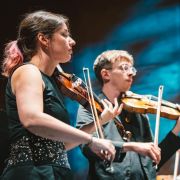
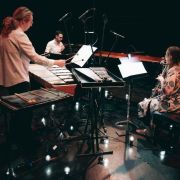
Dame Imogen Cooper, the much loved doyenne of English pianists, gave her valedictory concerto performances in an all Mozart Royal Northern Sinfonia programme at The Glasshouse. Following the overture to La clemenza di Tito, she duetted with Paul Lewis in Mozart’s rarely heard Concerto no. 10 in E flat major for two pianos, K365, the two pianists exchanging ideas, moods and nuances fluently and sympathetically. Lewis’ tone – in fact, his overall approach – was a great deal more contemporary than Cooper’s, brilliant where hers was warm and at times urgent where she was restrained. This difference in approach lasted almost to the end of the work when Cooper suddenly launched an absolutely daemonic double trill, as if throwing a thunderbolt from Olympus, a wonderful moment of drama in a performance which had perhaps been a little lacking in light and shade.


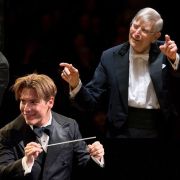
At one time there was a school of thought which held that Mozart’s music was the embodiment of restrained passion, and if Cooper perhaps exemplified this in her playing, Dinis Sousa, in his interpretations of the two overtures in the programme, went to the other extreme. Launching himself into the air and directing great right hooks towards the orchestra in a positively Bernstein-like manner, he brought the Clemenza overture brilliantly to life with rich colours and impressive dynamic levels from such a small band. Don Giovanni fared less well. Mozart wrote this overture in a tearing hurry – possibly on the morning of the premiere itself – and the lack of oversight is audible. Sousa approached it with vigour, again employing many of the same almost violent gestures, and the texture had more than the occasional nod to Beethoven (who had roundly condemned the entire opera) in its dramatic sfortzati and whispered pianissimi. There was a slight lack of ensemble in the strings’ tricky syncopated sections of the Andante, coupled with a few tuning issues in the lower winds, which at times gave the performance an unsettled feel. The RNS horns were having an undistinguished night in general and here was no exception.
Following this drama, Cooper took to the concerto platform for the last time, in the Piano Concerto, no. 27 in B flat major, perhaps Mozart’s least dramatic and virtuosic work for piano. If Don Giovanni is like surveying a war zone, this concerto is like having a quiet drink with an old friend and Cooper’s restrained, unfussy approach was exactly suited to it. The opening Allegro seemed to be conceived almost as an Andante moderato (and got slower as it went on) but this can work; the point is really in the reflection and interplay rather than any inherent drama. I felt that the approach to the finale (a jaunty 6/8 Allegro) carried the reflective mood a bit too far into unsuitable territory, approached as it was more as a delicate Allegretto rather than the release from the preceding introspection which Mozart perhaps intended. These are minor points and very much a matter of opinion. It was quite obviously to the audience’s taste and the applause continued long after the Dame and her enormous bouquet of flowers had left the stage.