The programme note for the Royal Liverpool Philharmonic Orchestra's performance of Mendelssohn's Scottish Symphony talked of the content being “music to set the imagination roaming widely and richly”. That was certainly true, but combining the levity – for the most part – of Mozart in the first half with the somewhat dour Mendelssohn offering meant that the audience was travelling along a road in bright sunshine one moment and then, suddenly, finding themselves beset by storms and darkness.

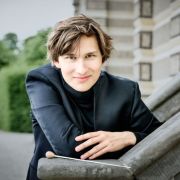
Conductor Aurel Dawidiuk, aged just 25, is a bundle of energy, throwing himself almost literally into the role and reaping rich rewards in the process. His introduction to the first movement of the Mendelssohn brought out a feeling of extreme melancholy and moodiness which was mightily dramatic. But once the Allegro section got under way, an infectious vivacity spread through the orchestra, perhaps excessively so, since the poco agitato became more molto agitato. As if that wasn't enough, the lively tension was ratcheted up an extra notch in the Vivace non troppo second movement which turned into a real whirl.
And then the comedown, which comprised an incredibly dark reading of the Adagio. There was drama, certainly, but it felt almost hidden under a blanket of near misery. Relief all round, then, when the Allegro vivacissimo finale burst onto the scene. Dawidiuk really let rip here with in the glorious chorale-like ending. Special mention should be made of the fine playing from the French horns and some really enticing woodwind solos. The strings, too, often presented with tricky Allegro passages, played with considerable finesse in a piece which can so easily become ragged.
After the overture to The Marriage of Figaro balanced light and shade expertly, the soloist in Mozart's Piano Concerto no. 22 in E flat major, K482, was Till Fellner who had, by chance, taught Dawidiuk when the conductor studied at the Zurich University of the Arts. Fellner's performance was dependable and shapely. Both he and Dawidiuk brought drama to the first movement although the performance rarely brought the audience to the edge of its collective seat. Even the cadenza was quite reined in so, while the fireworks could have been let off, the match never really made contact with the blue touch paper.
The real drama came in the central Andante, where Fellner milked the melancholy. The RLPO demonstrated considerable finesse in its accompaniment with the wind septet episode early being particularly memorable. There were also some stunning woodwind solos, particularly from the flute and bassoon. The finale initially felt a little slow but Dawidiuk produced a finely paced and balanced interpretation. Together with Fellner's highly inventive cadenza and the subtle orchestral accompaniment, this was an extremely worthy performance.