It’s December, so performances of Handel’s Messiah are abounding. From the larger scale with generous choral forces to informal come-and-sing events, this seasonal staple packs out concert halls and churches. In Victorian times, the trend was for huge choirs and orchestras to produce ground-shaking Handel spectaculars, but if you want to hear the work as it might have been performed in Handel’s day, The Dunedin Consort’s historically informed boutique approach brims with exuberant authenticity.

A tiny orchestra of just eleven string players with chamber organ continuo are set against a chorus of a dozen singers, the soloists stepping forward to sing, as they did at those first performances in 1742 in Dublin, the audience asked to leave skirt hoops and swords at home for reasons of space. The scaled-back style encourages clarity and focused storytelling, essential in a work vividly taking us from Old Testament prophecy through Jesus’ birth, death and resurrection to the last trumpet.


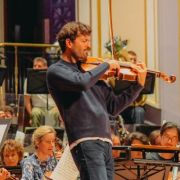
John Butt directed from the harpsichord with boundless enthusiasm and élan, Matthew Truscott energetically leading the players, the lovely mellow sound of the Baroque strings setting the scene in the opening Sinfony promising a sprightly performance. Throughout, there was meticulous attention to detail and phrasing, cellists Jonathan Manson and Lucia Capellaro with bassist Christine Sticher and Stephen Farr on the organ a hard-working continuo at the heart of the music. Even when Butt drove his players at breakneck rates, the details were not lost with runs executed in a whirlwind of flying bows.
It’s a tricky call for soloists to deliver their recitatives and arias then blend back into a choir, but choruses were well balanced and thrillingly delivered, packing plenty of punch, the Dunedin’s straying sheep on turbocharged speed. In the Perth Concert Hall acoustic, which favours instruments over voice, the choir had to work extra hard for the top lines to cut through, some soprano gloss was lost when Butt’s players were going full tilt which a church acoustic might have saved. The passion choruses, “Surely he has borne our griefs” and “He trusted in God” coming after the “shame and spitting” were delivered with sharp political anger, reminding me of Bach’s short sharp, dramatic passion choruses.
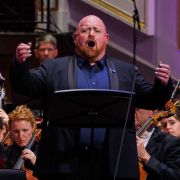
Both male soloists were large lyrical voices, tenor Joshua Ellicott beautifully growing the long notes in “Comfort ye”, fearsome in the declamatory “Thou shalt break them” and holding back to blend with the mezzo in “O death, where is thy sting” . Dingle Yandell, a Messiah stalwart given his battered score, made thrilling drama in his arias, his generous bass-baritone voice fearsomely “shaking the nations”, his “People that walked in darkness” contrasting inky blackness with blazing light. “The Trumpet shall sound” was a highlight, Paul Sharp’s period trumpet blending with the ensemble perfectly.


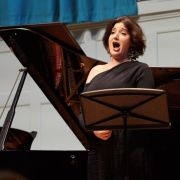
Arguably, the mezzo soloist gets the best arias to sing in Messiah. Australian Lotte Betts-Dean inhabited her arias dramatically with her rich honeyed voice. Though occasionally swamped by the ensemble, she nailed the contrasts brilliantly in “He was despised”. Nardus Williams' clear bright soprano brought dramatic edge, pouring out optimism and hope in “Rejoice greatly” and standout in “I know that my Redeemer liveth”.
There were no swords or skirt hoops in Perth, but among the generally elderly crowd, quite a few with sticks, many were determinedly on their feet for the Hallelujah Chorus as trumpets and drums blazed.