“Some colleagues will say it’s too much… but during the recording, I must confess: I know his level of demand. I tried to be the best I could. But we worked so much on the pieces again, and sometimes we had to re-record a single, apparently easy piece so many times.”

The legendary French pianist Pierre-Laurent Aimard is telling me what it was like to record György Kurtág’s Játékok (Games) under the composer’s famously demanding gaze. “I thought at such moments, maybe my colleagues are right! But then listening to the results, and going through the process, I thought no: he was really right.”
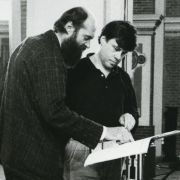
The recording in question, one of several Aimard has made recently for the Dutch label Pentatone, brings together 81 of the miniatures in the remarkable diary-cum-workshop-cum-pedagogy that is Játékok. Kurtág turns 100 this week. The energy he is still able to bring to a project like this will not surprise anyone who has experienced the eternal youthfulness of his slightly younger years (I remember a clearly audible gasp from the Royal Festival Hall audience when he leapt onto the stage in his 80s – eschewing the steps – after a performance of Grabstein für Stefan). Yet I am surprised he remains that demanding of such a close and experienced associate – Aimard has played his music for almost 50 years. “Of course! This is why I continue to go on working with him!’
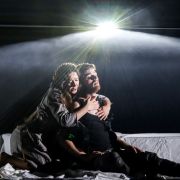
Aimard first encountered Kurtág’s fastidiousness soon after he joined Ensemble intercontemporain as a pianist. In January 1981, they gave the premiere of one of Kurtág’s finest works, the Messages of the Late Miss R.V. Troussova, a song cycle for soprano and ensemble on poems by Rimma Dalos that was commissioned by the ensemble and performed by them with the soprano Adrienne Csengery, another long-time Kurtág interpreter, and conductor Sylvain Cambreling.


At one point in the score of Troussova – “A slender needle of suffering / will pierce my heart” is the line – Kurtág inserts the sound of a breaking wine glass, a part he gives to the pianist. “It was extraordinary”, remembers Aimard. “Because he was as demanding for that as for any played sounds. I remember he made our stage manager very nervous because he went to a shop to buy glasses that would sound good – so they were quite expensive. But after the first rehearsal, they were all gone, because Kurtág wanted to make it better and to listen to it again.”
With the stage manager beginning to fret about the concert’s budget, more glasses were acquired. “In the end, I didn’t find the right way to do it, even after we had broken so many glasses. So many boxes of glasses”, continues Aimard. “Then [Pierre] Boulez came to one of the rehearsals, and he told me no, look, it’s not like that. And he showed me. So the conductor started, and then Boulez broke the glass. And Kurtág, for the first time, was totally happy. It was exactly the right sound!” The extra efforts were worth it. Before Troussova, Kurtág’s music was little known outside Hungary; where it had been heard in the West it was cast aside as too obscure even for the avant-garde. After the searing, astonishing Troussova premiere, however, things were different. From this point the composer’s international recognition began quickly to grow.
Aimard’s first meeting with the composer had come a few years before this. In the liner notes to his Játékok CD, he recalls being introduced, at the composer’s Budapest apartment. Aimard was still young and at the start of his career; Kurtág, though already fifty, was painfully shy. For 30 or 40 minutes, the two musicians sat in “interminable silence”. Eventually, Kurtág invited Aimard to join him at the piano. He placed on the stand some recently finished music – volume IV of Játékok, for piano duo – and the two men began to play together.
“I’m French”, says Aimard, remembering the moment for me. “I come from a culture where the spoken language is more important than the sounding language. And then I discovered somebody for whom music is so central that it is his best tool for connecting with people. I was somebody that he didn’t know, whom he had just met and didn’t know how I played. But for him, it was the most natural thing to get to know each other – let’s go to the instrument, to play, to share in something. He was gently guiding and showing me things; this was a quite unusual and incredible first meeting.”
Their connection soon deepened. Not long after, Kurtág moved to Paris. Unofficially and in private, he and his wife Márta (a renowned pianist in her own right) began making night-time recordings of the Játékok together, inviting a small group of friends to serve as an audience in the studio. Aimard was asked to be among them. “This was a way to absorb these pieces that was incredible – at the source, really”, he says.
And the music itself has the intimacy of pillow talk. It is full of secret moments and private jokes. Not only in the wealth of allusions to the composer’s friends, colleagues and historical forebears (La fille aux cheveux de lin – enragée is one title; Phone numbers of our loved ones another), but in the redundant or tautological instructions liberally sprinkled throughout – crescendos marked under held notes (physically impossible on a piano), two fingers playing the same note at once, hands instructed to cross when it would be easier to do otherwise.
I asked Aimard what he makes of such paradoxes. “There is always a very strong reason, sometimes an inner reason”, he says. “I was amazed to discover the difference if it is done this way. For example, the crossed hands. Sometimes you have these distributed, apparently isolated notes that design a kind of choreography on the instrumental space. But clearly, if you follow his way to cross the hands, then the phrasing, the timing and the bodily movement are completely different – even on the recording.” The music then, is a kind of gift to the performer, one that reveals itself fully only in the playing of it.


Speaking of gifts, Kurtág’s centenary is being marked by celebratory performances around the world – not least of which is the premiere of his second opera, Die Stechardin in Budapest, a setting of love letters by the 18th-century polymath Georg Christoph Lichtenberg, and composed in memory of Márta Kurtág, who died in 2019. (Kurtág’s first opera, on Samuel Beckett’s Endgame, took him a lifetime to write; his second took barely three years, a remarkable feat for someone in their tenth decade.)
Naturally, Aimard has placed his long-time friend at the centre of his own performing and recording schedule. Last year saw not only the release of the Játékok album but also a song recital disc by Benjamin Appl that paired songs by Kurtág with those of Schubert and Brahms (Aimard accompanies Appl in the Kurtág songs only). And this year, he is giving numerous recitals that pair selections from Játékok with the music of other composers – in particular Schubert, many of whose waltzes and Ländler Aimard has recently recorded for Pentatone. Played, as Aimard does, without repeats, these become Kurtágesque miniatures themselves, many of them less than a minute long but no less rich with emotional turns and musical detail.
György and Márta’s own Játékok recitals often included extracts of Bach (in Kurtág’s idiosyncratic transcriptions), which acted like stone pillars rooting the often ephemeral, aphoristic and ironic Játékok to the ground. Schubert’s dances – no less evanescent in their way – perform a very different function, it seems; Aimard describes the structure of these recitals as more somnambulant, with the wandering logic of a dream. What inspired him to bring these two composers into conversation?
“Pure intuition”, he says. “Because for me they were always brothers. Brothers in fragility, in secret gardens, in a relationship to society that was not targeted towards success.” Aimard started to play them together during the pandemic – this was not a coincidence because, he says: “They are not good composers for the stage, in these kinds of pieces… Játékok were never pieces conceived for concerts. They are a diary, they are presents, messages. For Schubert, the case is different because in the case of the dances they were officially done for the market. But in reality, what he provided was a message; messages of the heart.”
Gifts again. Although the two men’s lives were very different, for both of them friendship – and particularly friendship communicated and sustained through music-making – was essential. Of Kurtág, Aimard notes that many of his pieces were composed initially for friends and colleagues. Not in the slightly aloof sense of a one-line dedication at the head of the score, but as actual presents.
“When he composes a piece, he makes copies and offers them to the people around him. I often received such presents. And, of course, receiving the composer’s notation from his own hands, when the piece is still fresh, young… When you discover it, with the small community of people who have got this present, that is something very fragile. Very special and very emotional.”
In time for his 100th birthday, may Kurtág be the recipient for once, as well as the eternal giver. Happy birthday.
Pierre-Laurent Aimard performs in celebration of György Kurtág in Budapest on 20th February, including the premiere of new opera Die Stechardin.